How Antique Doll Eye Glass Colors Interact With Surrounding Paint
The Unchanging Center in a Fading Face
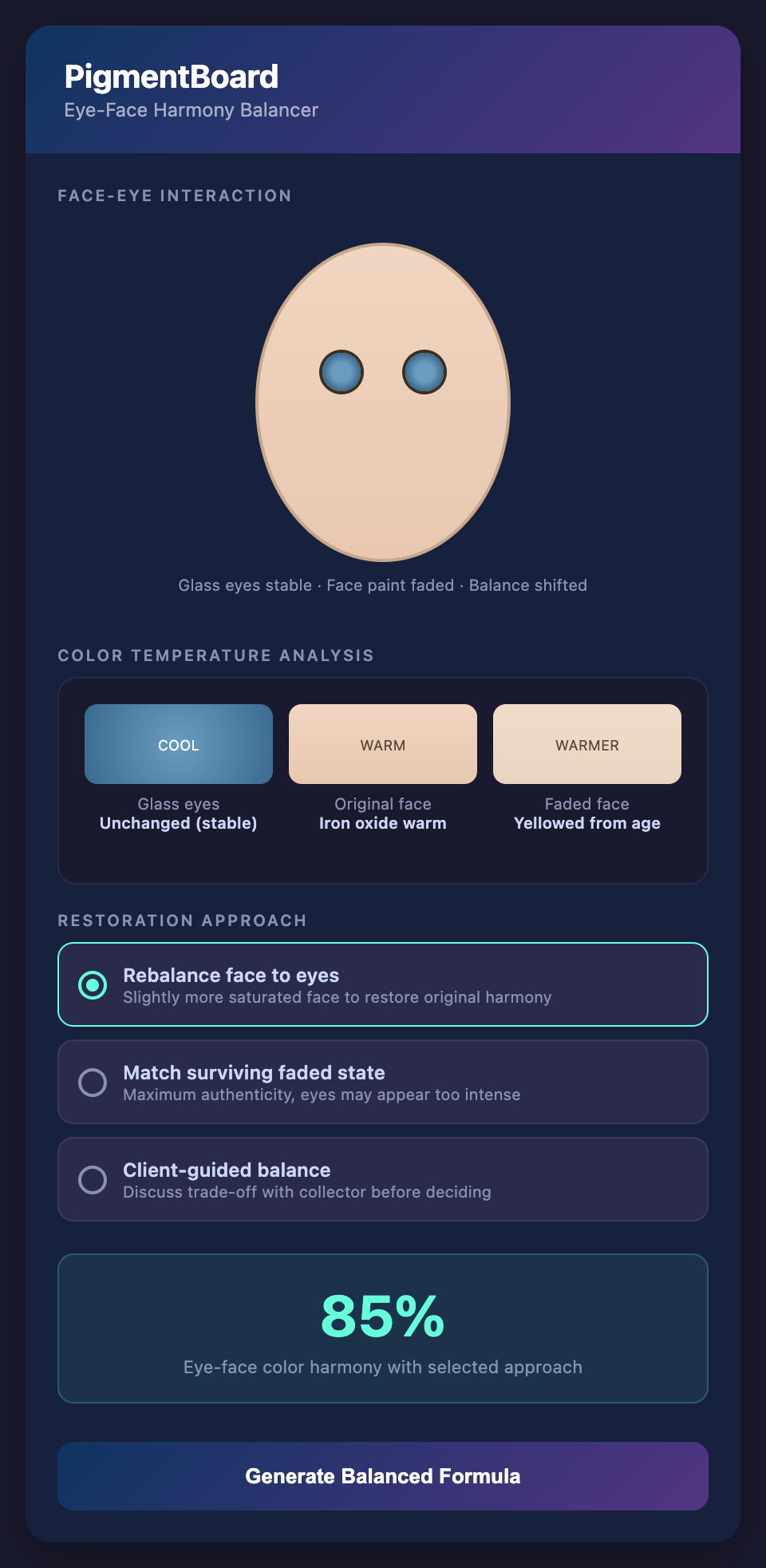
Glass eyes on antique dolls are remarkably stable. The borosilicate glass and vitreous enamel colors used for iris and pupil details resist UV, oxidation, and most environmental factors. A pair of glass eyes from 1880 looks essentially the same as it did when new.
Everything around those eyes, however, has changed. The complexion wash has faded. The cheek blush has shifted. The eyelid lines have thinned. The brows may have lost definition. The result is that the stable glass eyes now appear more vivid and intense relative to the faded face than they did originally.
The Perceptual Problem
Color perception is contextual. A blue iris looks different surrounded by warm peach skin than surrounded by faded yellowish skin. Specifically:
- Faded, warmer surroundings make the glass eyes appear cooler and more vivid by contrast
- Lost eyelid definition makes the eyes appear to "float" without proper framing
- Faded brows reduce the visual weight above the eyes, making the eyes dominate the face
These perceptual effects mean that even if you perfectly match the faded face paint, the overall impression may still feel "off" because the original balance between face and eyes has shifted.
Restoration Strategies
Option 1: Restore face to match the eyes' visual context. If you restore the surrounding face paint to a state that re-balances the relationship with the unchanged glass eyes, the face looks harmonious. This may mean slightly more saturated face colors than the surviving original.
Option 2: Restore face to match surviving originals. If you match only the faded state, the face may look harmonious with itself but the eyes may appear too intense.
Option 3: Discuss with the client. Explain the trade-off. Some clients prefer maximum authenticity (matching the faded state). Others prefer maximum beauty (restoring the eye-face balance).
Color Temperature Harmony
The most critical factor in eye-face harmony is color temperature:
- Glass eyes are typically cool-toned (blue, gray-blue, cool brown)
- Original face paint was warm-toned (iron oxide pinks, warm flesh)
- Faded face paint is even warmer (yellowed from age and smoke)
If your face restoration is too cool, the eyes and face compete. If it is too warm, the eyes appear disconnected. The original balance was warm face + cool eyes, and restoring that balance produces the most natural result.
Eye Replacement Considerations
Sometimes glass eyes need replacement (damaged, missing, or wrong-era replacements). The new eye color must harmonize with both:
- The current faded face paint (or the proposed restoration)
- The expected overall color balance of the manufacturer's original design
Consult manufacturer references for the correct eye color for the specific mold number.
Want to model face-eye color harmony using degradation predictions? Join the PigmentBoard waitlist.