Understanding China Paint Degradation on Antique Porcelain Dolls
What China Paint Actually Is
China paint (overglaze enamel) is a mixture of finely ground pigment and glass-forming flux (typically lead borosilicate). When fired at 700-800°C, the flux melts and fuses the pigment to the surface. The result is a thin glass layer with suspended pigment particles, bonded to the porcelain.
The Structure of China Paint Layers on Dolls
On antique dolls, china paint was applied in multiple fired layers:
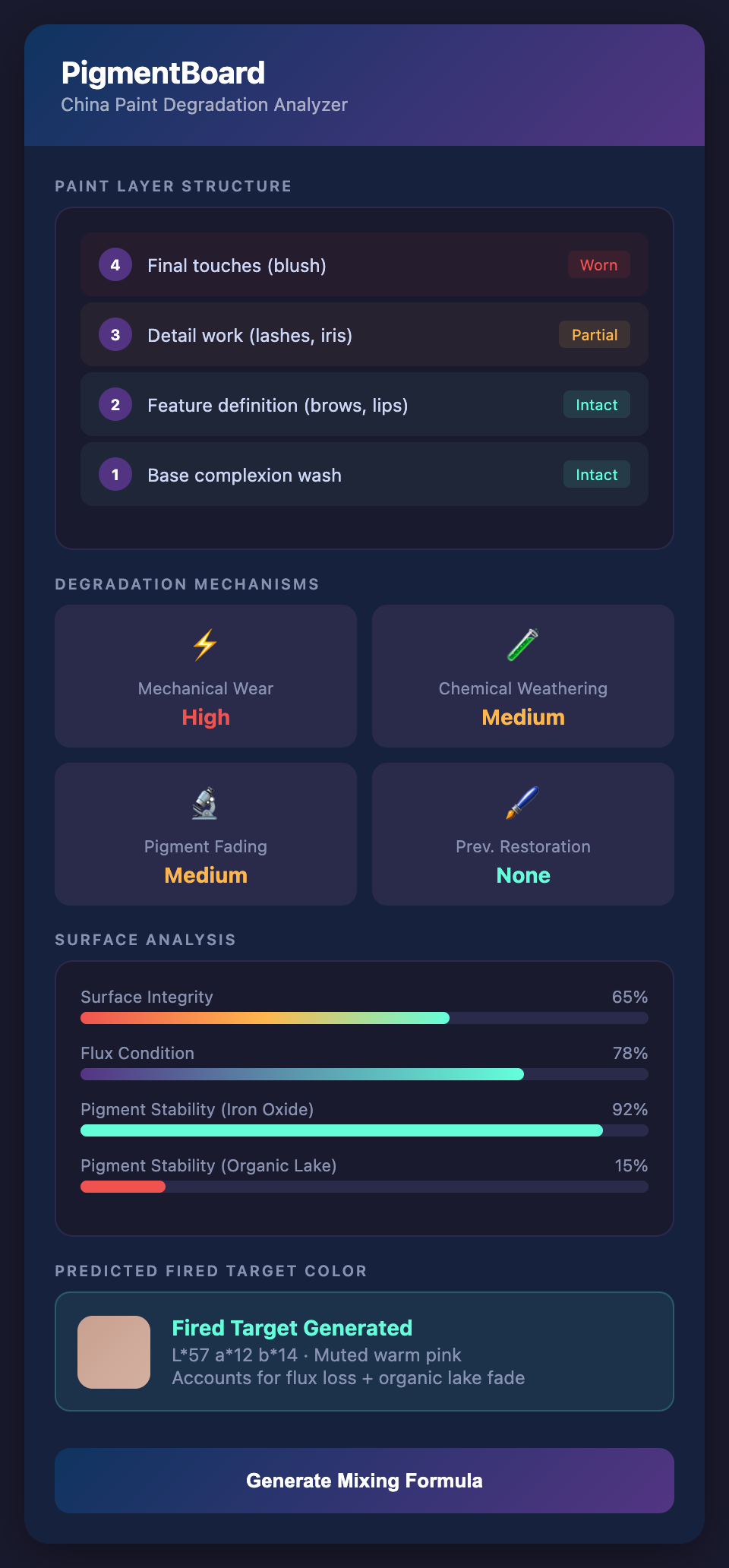
- Layer 1: Base complexion wash — thin, nearly transparent flesh tone over the entire head
- Layer 2: Feature definition — eyebrows, lip color, cheek blush
- Layer 3: Detail work — eyelash lines, iris color, pupil dots
- Layer 4 (sometimes): Final touches — additional blush, nostril shading
Each layer was fired before the next. Degradation can affect layers differently.
Degradation Mechanisms
Mechanical wear is the most common. China paint layers are thin (10-50 microns) and relatively soft. Handling, cleaning, and storage cause gradual abrasion, especially on cheek high points, nose tip, and chin.
Chemical weathering of the flux. The lead-based flux is susceptible to acidic environments, humidity cycling (causing micro-cracking), and alkaline cleaning solutions.
Pigment-specific degradation. Iron oxides are extremely stable. Organic lake pigments are vulnerable to UV even when encapsulated in flux. Lead-based pigments can darken in sulfur-rich environments.
Previous restoration degradation. Acrylic paint yellows over time. Artist's oils yellow significantly. Nail polish degrades to a yellowish, cracked film. These previous restorations age differently from original china paint.
Identifying the Degradation Profile
Visual examination under magnification: Is the surface smooth (intact) or granular (degraded)? Are pigment particles visible? Is color loss uniform or patchy?
UV fluorescence: Original china paint shows minimal fluorescence. Acrylic repairs fluoresce brightly. Oil paint shows warm yellowish fluorescence.
Touch test: Well-fired original paint feels smooth and glassy. Degraded paint feels rough or powdery. Non-china-paint repairs feel different.
Implications for Color Matching
Primarily mechanical wear: Match the remaining original color at blending thickness.
Chemical flux degradation: Account for the surface difference, not just the color.
Organic lake fading: Match the residual color (primarily iron oxide), which is cooler and less vibrant than the original.
Previous restoration overlap: Decide whether to match original, previous restoration, or a combination.
The Firing Variable
China paint changes color dramatically during firing. Your unfired mixture will look completely different from the fired result. A degradation model that predicts the fired target color eliminates the iterative fire-compare-adjust cycle.
Want to predict fired china paint colors before opening the kiln? Join the PigmentBoard waitlist.