How Display Conditions Cause Ongoing Doll Paint Degradation
The Display Problem
A perfectly restored doll placed back in the same display conditions that caused its original fading will fade again. Understanding the threats lets you advise clients.
The Main Threats
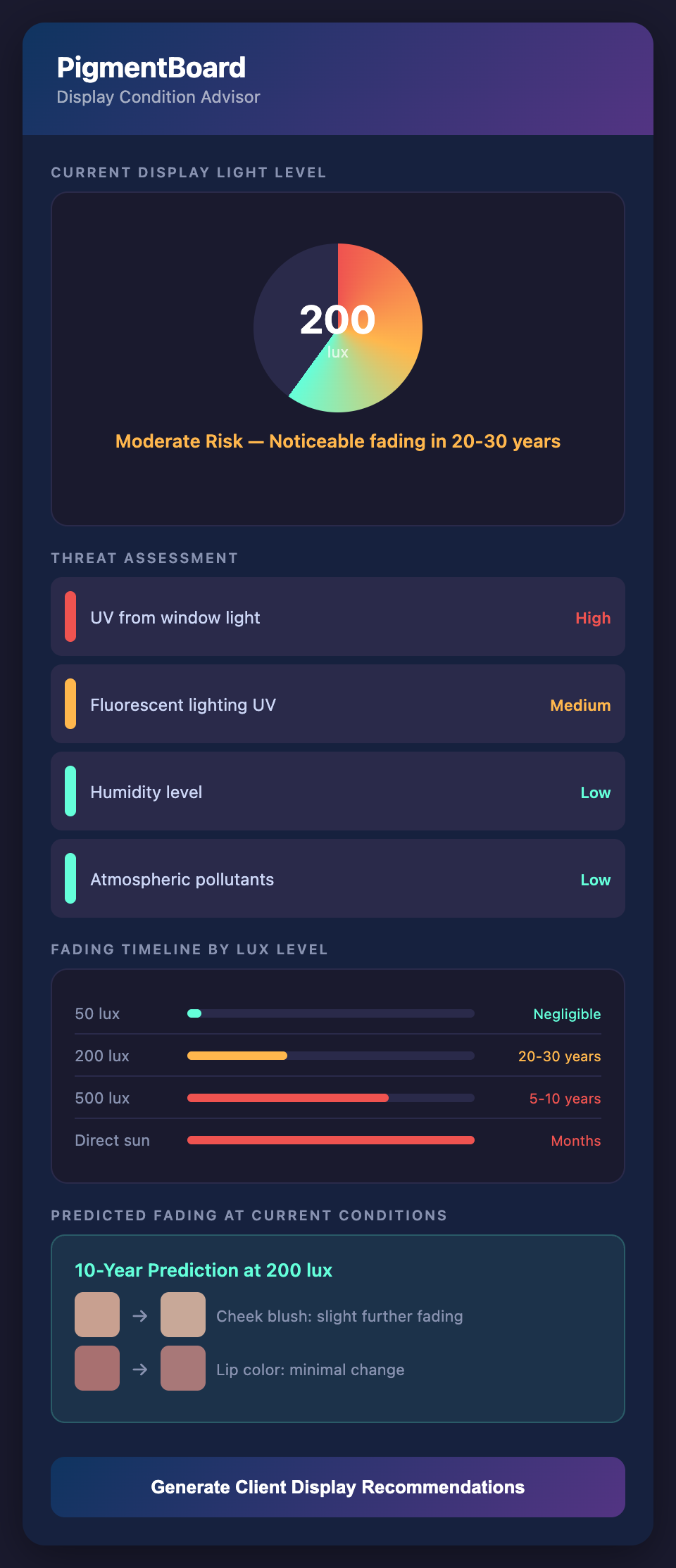
Sunlight and UV — the number one enemy. Fluorescent lighting — significant UV output. Spotlight heat — accelerates chemical degradation. Humidity — promotes micro-flaking and chemical reactions. Atmospheric pollutants — tobacco smoke, cooking vapors, outgassing from display materials.
Quantifying the Risk
- 50 lux (museum standard): negligible fading over decades
- 200 lux (well-lit cabinet): noticeable fading in 20-30 years
- 500+ lux (near window): significant fading in 5-10 years
- Direct sunlight: dramatic fading within months
Practical Recommendations
Location: Away from windows, interior walls optimal. Lighting: LED (minimal UV), moderate intensity, diffused. Climate: 40-55% RH, away from HVAC vents and radiators. Enclosure: Glass-fronted cabinets, clean materials, some ventilation.
Advising Clients
Explain the causes of original fading. Provide specific recommendations. Quantify the benefit: "Moving the doll away from that window extends this restoration from 10 years to 50+."
Degradation Model for Prevention
The same model that predicts faded colors can predict future fading under proposed display conditions, showing the client visual predictions.
Ready to predict and prevent future doll paint degradation? Join the PigmentBoard waitlist.