Identifying and Removing Previous Non-Original Doll Restorations
The Layers of History
Most antique dolls that reach a professional restorer have been "fixed" at least once before — by previous owners, amateur restorers, or less-skilled professionals. These previous restorations range from careful china paint work to nail polish, hobby acrylics, and even house paint.
Identifying Previous Restorations
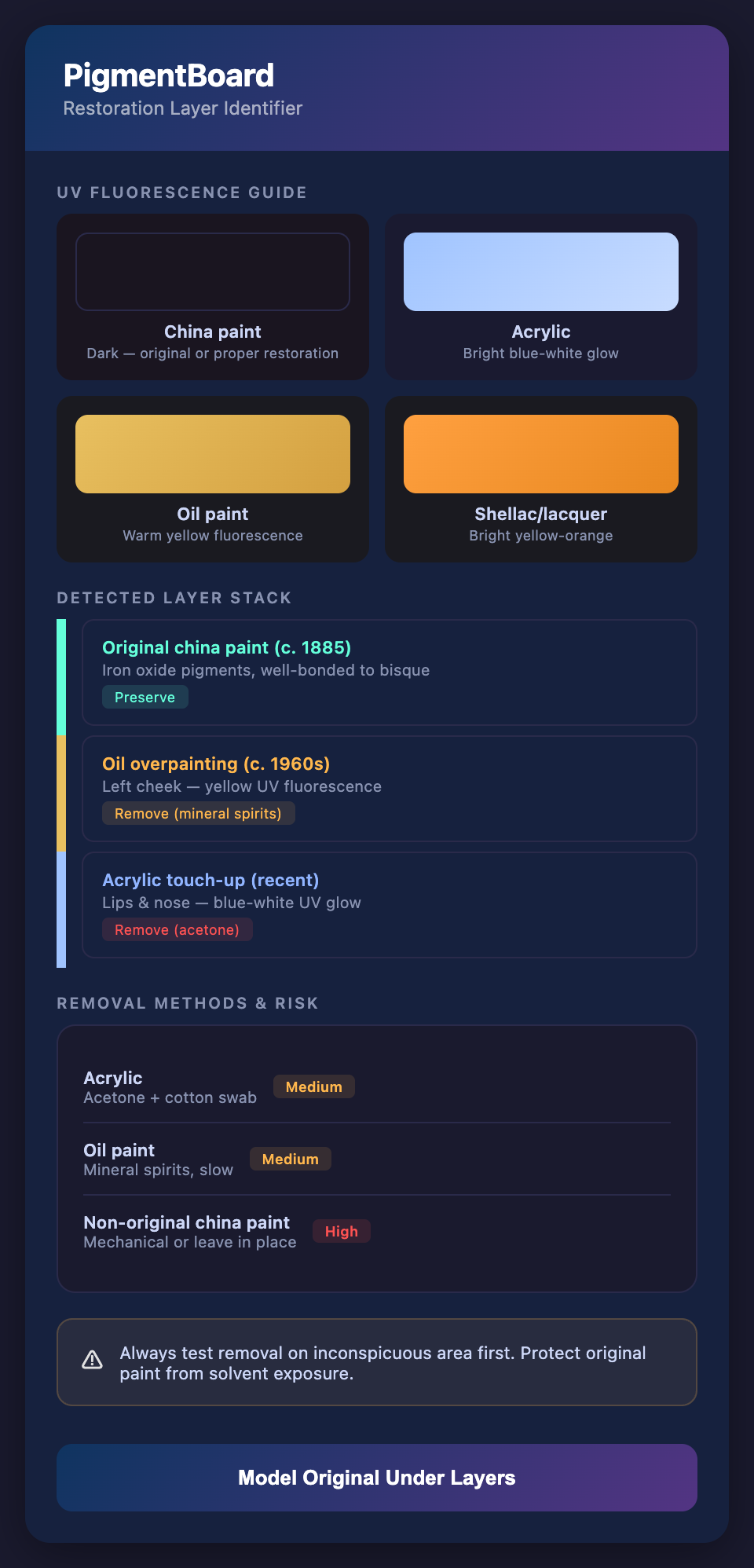
UV fluorescence is the most powerful identification tool:
- China paint (original or properly applied restoration): dark, minimal fluorescence
- Acrylic paint: bright white-blue fluorescence
- Oil paint: warm yellowish fluorescence
- Nail polish/lacquer: variable, often bright fluorescence
- Shellac: bright yellow-orange fluorescence
Visual clues:
- Different surface texture from original (brushier, thicker, different sheen)
- Color that does not match manufacturer's known palette
- Overlapping onto undamaged original paint
- Inconsistent aging (the "restoration" looks newer or differently aged than surrounding paint)
- Visible brush strokes in a style different from the manufacturer's
Physical clues:
- Different feel (acrylic is slightly rubbery; oil paint is smooth and cool; original china paint is hard and glassy)
- Solvent sensitivity (acrylic dissolves in acetone; oil paint softens in mineral spirits; china paint is insoluble in common solvents)
Removal Methods
Important: Always test removal methods on the most inconspicuous area of the non-original paint first. Always protect original paint from the removal process.
Acrylic paint: Softens with acetone (apply with cotton swab, minimal wetting). Remove mechanically with wooden toothpick or bamboo skewer once softened. Work slowly under magnification. Risk: Acetone can attack the underlying bisque if overused.
Oil paint: Softens with mineral spirits or turpentine. Longer exposure time needed than for acrylics. Risk: Can dissolve into the bisque pores, leaving ghost staining.
Nail polish/lacquer: Dissolves in acetone. Usually easier to remove than acrylics because it forms a discrete film rather than bonding to the surface. Risk: Same as acrylics.
Non-original china paint: Cannot be chemically removed without also removing original china paint. Mechanical removal (scraping with a scalpel under magnification) or selective kiln over-firing are sometimes possible but risky. Often best to leave and paint over if it is well-bonded.
When to Remove vs. When to Leave
Remove when:
- The previous restoration is actively deteriorating (flaking, discoloring)
- It obscures original paint that you need to see for matching
- It creates an unacceptable surface for new restoration
- The client specifically requests removal
Leave when:
- It is well-bonded and stable
- Removing it carries unacceptable risk to the original
- It can be satisfactorily matched or painted over
- The cost of removal is disproportionate to the improvement
Documentation During Removal
Photograph at each stage of removal. Document what was found under each layer. Preserve a record of the complete paint history for future reference.
Want to model the original color even when previous restorations have obscured it? Join the PigmentBoard waitlist.