Matching Doll Complexion Across Different Porcelain Bodies
The Substrate Matters
Porcelain bisque is not a neutral, standardized substrate. Different manufacturers used different clay bodies, different firing temperatures, and different surface preparations. These differences affect the final color of every china paint application.
How Porcelain Varies
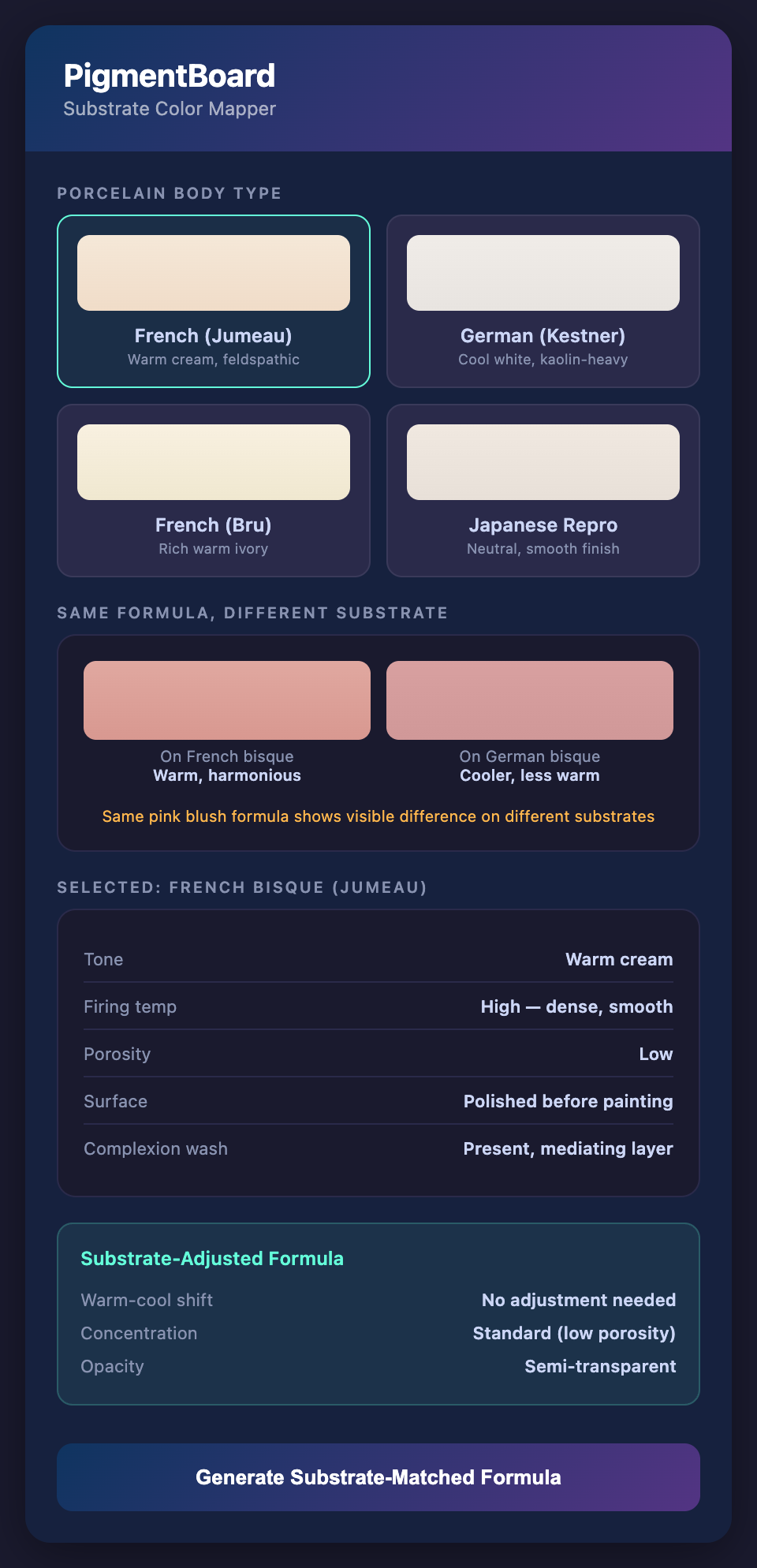
Clay composition. French porcelain typically uses a feldspathic paste that fires to a warm, creamy white. German porcelain often uses a kaolin-heavy paste that fires cooler and whiter. Japanese reproduction porcelain has its own distinct tone.
Firing temperature. Higher bisque firing produces a denser, less porous body with a smoother surface. Lower firing produces a more porous body that absorbs more china paint, affecting the final color and opacity.
Surface texture. Some manufacturers polished the bisque surface before painting. Others left it with a natural matte texture. The surface affects how china paint flows, adheres, and reflects light.
The Effect on China Paint Color
The same china paint formula applied to French and German bisque will look different:
- Warm French bisque + warm pink blush = harmonious warm tone
- Cool German bisque + the same warm pink blush = slightly cooler, less harmonious result
This means formulas are not directly transferable between porcelain types. A formula developed for Jumeau bisque will need adjustment for Kestner bisque.
Compensation Strategies
1. Always test on matched substrate. Prepare test tiles from the same general porcelain type as the doll you are restoring. At minimum, distinguish between French and German porcelain.
2. Adjust the warm-cool balance. On cooler porcelain, shift your formula slightly warmer. On warmer porcelain, you may be able to use a slightly cooler formula.
3. Adjust opacity. On more porous bisque (which absorbs more paint), you may need a slightly more concentrated formula. On dense, polished bisque, a thinner application achieves the same effect.
4. Consider the complexion wash. The original manufacturer chose their complexion wash to complement their specific porcelain. If the complexion wash is intact, it mediates between the porcelain and the feature colors. If it is missing, the raw porcelain's tone has a greater effect.
Building Substrate Awareness
Over time, build familiarity with the major porcelain types:
- Handle and examine as many different manufacturers' dolls as possible
- Note the color, texture, and porosity differences
- Test your standard formulas on different porcelain types and document the differences
- Build separate reference tile sets for French and German porcelain
Want to model color predictions that account for substrate variation? Join the PigmentBoard waitlist.