Matching Faded Clothing Dye Colors on Original Doll Outfits
The Complete Doll
A doll is not just a head. The original outfit — dress, bonnet, shoes, undergarments — is integral to its value and presentation. Collectors and dealers increasingly seek comprehensive restoration that addresses both the porcelain and the clothing.
How Doll Clothing Fades
Doll clothing uses the same 19th-century dyes as full-scale textiles: madder reds, indigo blues, cochineal pinks, logwood blacks, chrome yellows, and synthetic aniline dyes (after 1856). These dyes degrade through the same UV, oxidation, humidity, and pollutant mechanisms discussed for museum textiles.
Key differences from full-scale textiles:
- Scale. Doll clothing is miniature. Thread counts, fabric weights, and dye concentrations may differ from full-scale equivalents.
- Display conditions. Doll clothing is often displayed on the doll, in a collector's home, under whatever lighting conditions exist — typically more UV exposure than a museum textile.
- Handling. Doll clothing is dressed and undressed repeatedly, causing mechanical wear and fiber stress.
- Storage. Doll clothing is often stored loose in boxes or on the doll, not in archival textile storage.
Common Fading Patterns in Doll Clothing
Silk fabrics degrade fastest, especially tin-weighted silk (common in the 1880s-1900s). Silk shattering, color fading, and fiber loss are common.
Wool fabrics are more durable but show moth damage and dye fading, particularly of madder and cochineal reds.
Cotton fabrics are the most durable substrate but show significant dye fading, especially of printed designs.
Trims and ribbons may use different dyes or different fiber types than the main fabric, leading to differential fading.
Matching Strategies for Doll Clothing
1. Identify the original dye. Date, fiber type, and color suggest the probable dye. FORS or simple spot testing can confirm.
2. Determine the degradation pathway. Apply the appropriate textile degradation model (UV, humidity, oxidation) based on the clothing's estimated exposure history.
3. Match to the current faded state. As with porcelain restoration, match the clothing repair to the current aged state, not the original vivid color.
4. Harmonize with the restored doll. The clothing colors should harmonize with the doll's facial colors. If the doll has been restored to its aged state, the clothing should match that same level of aging.
5. Use appropriate materials. Textile repair uses different materials than porcelain repair — conservation-grade thread, fabric, and dyes rather than china paint and kiln firing.
The Coordinated Restoration
For the most polished result, plan doll and clothing restoration together:
- Assess both before starting either
- Determine the target "age level" for both — they should match
- Restore the doll first (its colors are the reference)
- Restore the clothing to harmonize with the restored doll
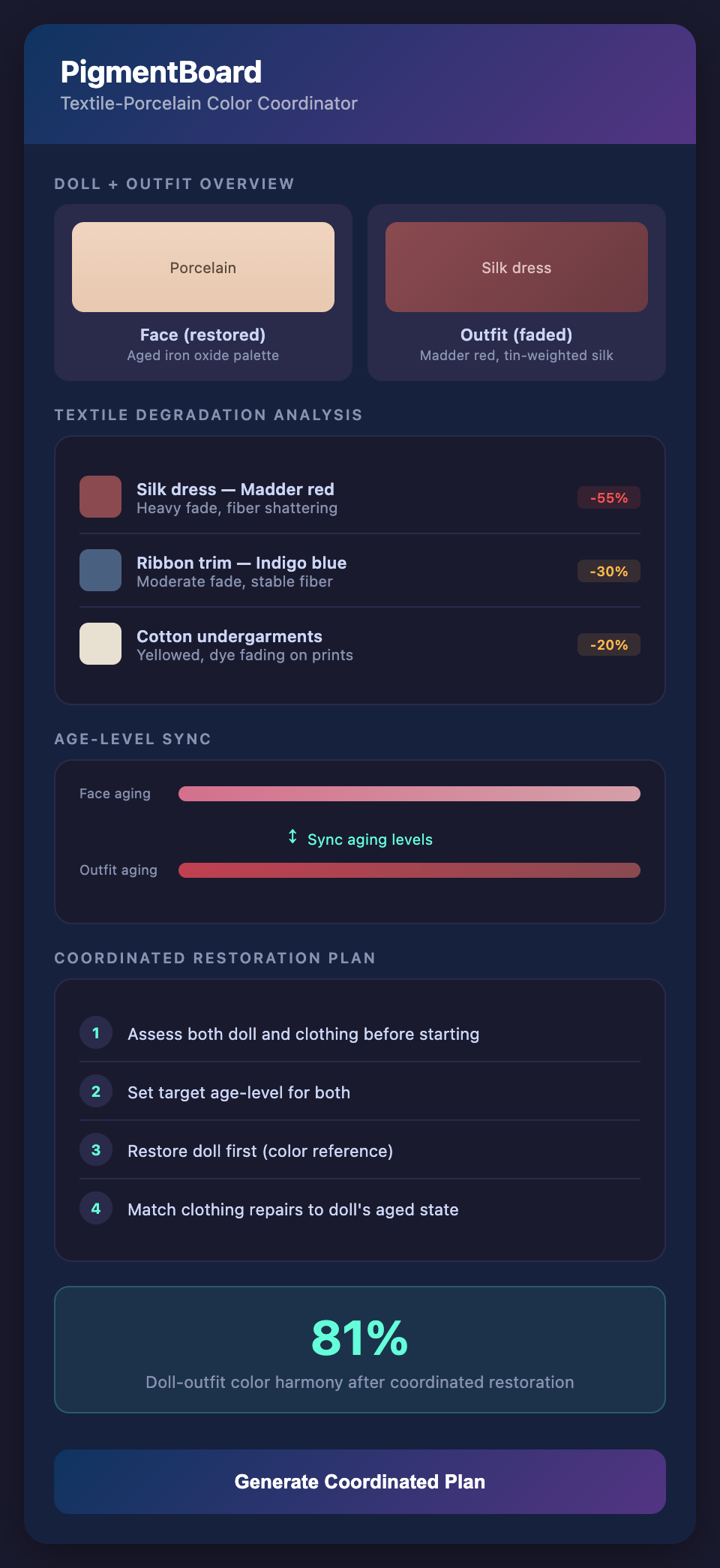
Want to model textile and porcelain degradation together for a coordinated restoration? Join the PigmentBoard waitlist.