The Role of Patina in Antique Doll Value and Restoration Ethics
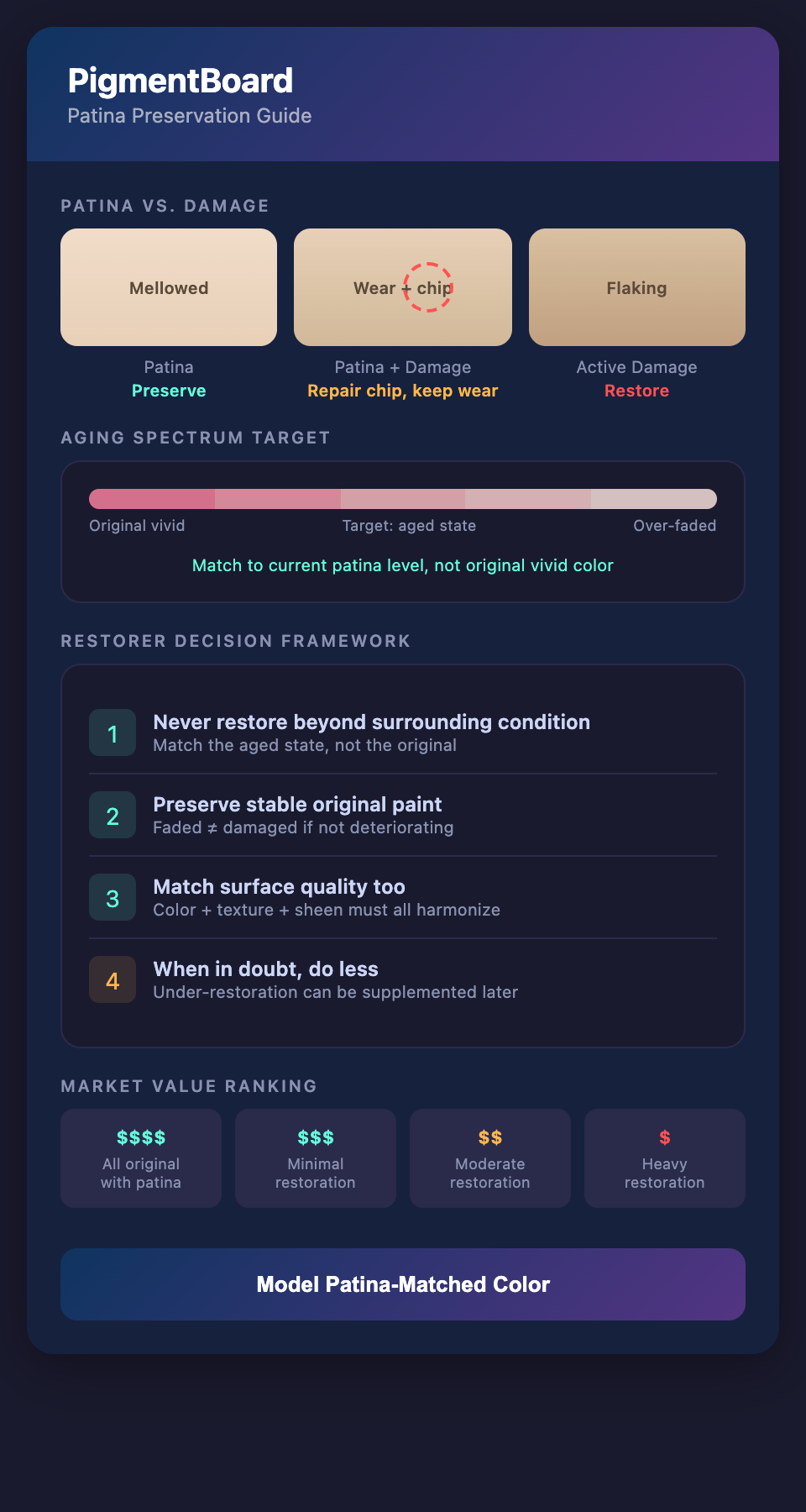
Patina Is Not Damage
There is a crucial distinction that every doll restorer must understand:
- Damage is deterioration that threatens the doll's physical integrity or historical legibility — flaking paint, structural cracks, missing elements
- Patina is the accumulated effect of age that adds character, authenticity, and value — gentle yellowing, softened colors, minor wear patterns
The goal of restoration is to address damage while preserving patina. Over-restoration that eliminates patina is as problematic as under-restoration that leaves damage unaddressed.
What Constitutes Patina on Dolls
Surface softening. The matte finish of aged bisque has a warmer, softer quality than new porcelain. This comes from decades of micro-wear and surface chemistry changes.
Color mellowing. The original vivid colors have softened to subtler tones. This mellowing is part of the doll's aesthetic appeal — collectors often prefer the aged palette to the original.
Wear patterns. Gentle wear on cheek high points, nose tip, and chin tells the story of the doll's life. These patterns are evidence of its history as a handled, loved object.
Gentle yellowing. A subtle warm tone from age and atmospheric exposure. Different from heavy smoke yellowing (which may warrant cleaning), gentle yellowing is usually considered part of the patina.
When Patina Conflicts With Restoration
The challenge arises when damage and patina coexist in the same area:
- A cheek with worn blush (patina) and a chip that needs filling (damage)
- Lips with mellowed color (patina) and a scratch through the paint (damage)
- Eyebrows with gentle fading (patina) and a missing section (damage)
In each case, the restoration must address the damage (fill the chip, cover the scratch, replace the missing section) while matching the surrounding patina (aged color, worn surface, mellowed tone).
The Restorer's Guidelines
1. Never restore beyond the surrounding condition. If the surviving blush has faded to a soft pink, restore the damaged area to the same soft pink — not to the original vivid rose.
2. Preserve all original paint that is stable. Do not repaint an area just because the original is faded. If the original paint is intact and not actively deteriorating, it is patina, not damage.
3. Match the surface quality, not just the color. New china paint has a slightly different surface quality from 140-year-old paint. Subtle adjustments to application technique can help the restoration age-match the original.
4. Discuss expectations with the client. Some clients want the doll to look "like new." Explain why this is both technically inappropriate and value-destructive. A well-preserved antique with appropriate patina is worth more than a heavily restored one.
5. When in doubt, do less. Under-restoration that can be supplemented later is preferable to over-restoration that cannot be undone.
The Market Perspective
The antique doll market consistently values original condition with patina over heavily restored condition:
- "All original, light wear" commands the highest prices
- "Professionally restored, minimal" commands strong prices
- "Heavily restored" reduces value — sometimes below unrestored condition
The restorer who understands and preserves patina protects the client's investment.
Degradation Modeling and Patina
A degradation model is particularly valuable for patina-preserving restoration because it predicts the aged state of the original — which is exactly the target for restoration that harmonizes with patina. Instead of mixing to what the color "should" be, you mix to what 140 years of specific degradation has made it.
Want to match the exact aged state of original patina? Join the PigmentBoard waitlist.