Restoring Composition Doll Body Paint to Match the Bisque Head
Two Materials, Two Aging Paths
Antique dolls combine a bisque head with a composition (wood pulp, sawdust, glue) body. The manufacturer matched body paint to head complexion. A century later, they look nothing alike.
How Composition Body Paint Degrades
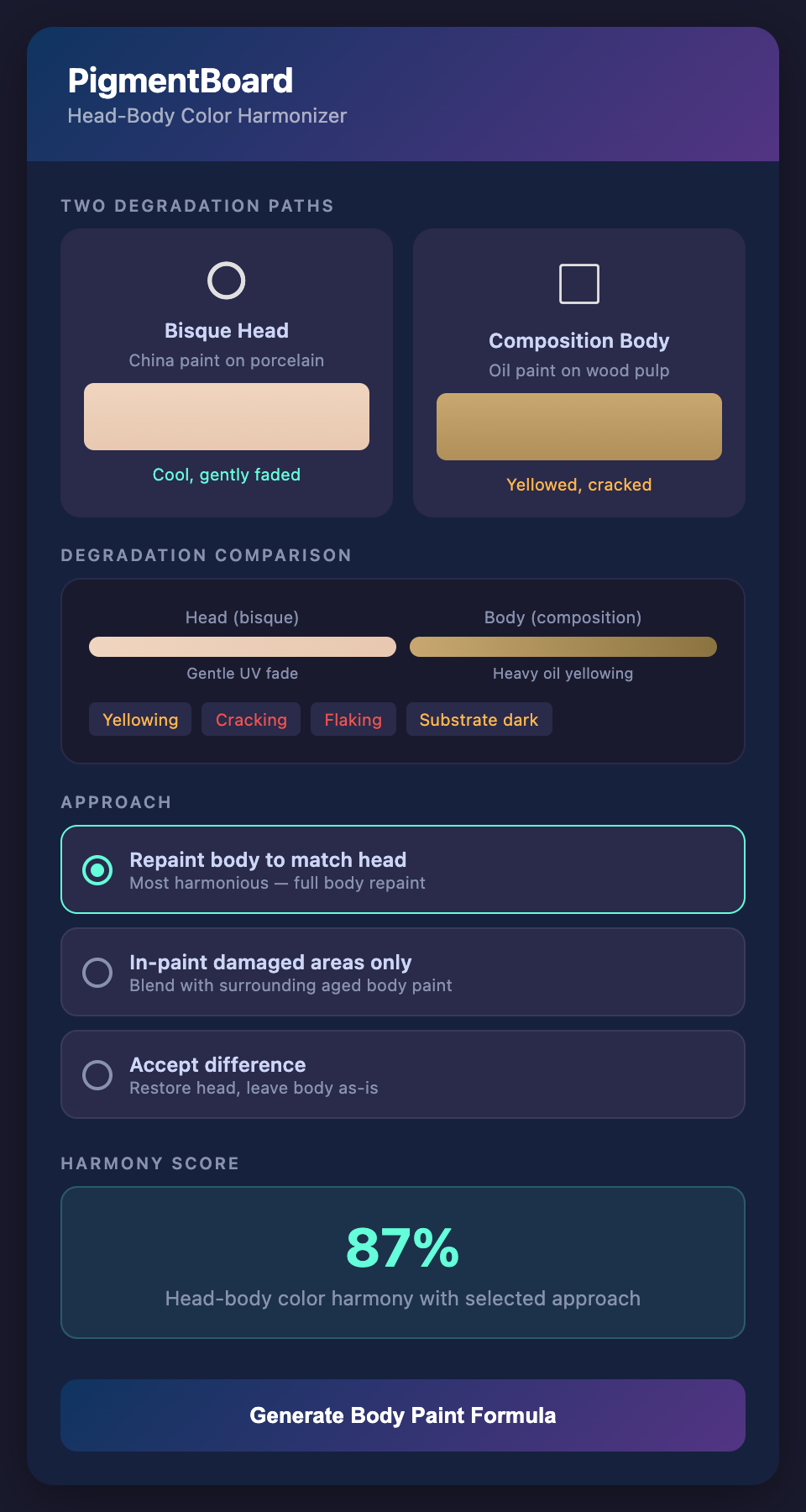
Yellowing from oils in the paint (linseed, stand oil) shifting from cool pink-beige toward warm yellow-brown. Cracking from substrate expansion/contraction. Flaking from advanced cracking exposing dark substrate. Substrate darkening showing through thinned paint. Biological attack on the organic substrate.
The Matching Challenge
The head retains its cool porcelain character with gently faded china paint. The body has heavily yellowed paint, extensive craquelure, and exposed dark substrate.
Approach Options
Option 1: Repaint body to match head's current state — most harmonious but requires full repaint. Option 2: In-paint only damaged areas to blend with surrounding aged body paint. Option 3: Accept the difference — restore head, leave body as-is.
Color-Matching Body Paint
Assess the target (head's complexion vs. body's surrounding paint). Account for material differences (different surface quality). Use appropriate paint (acrylic or casein, not china paint). Model both degradation paths independently.
Long-Term Considerations
Body restoration paint ages differently from original. Document materials used and expected aging characteristics for future restorers.
Want to model two different degradation paths and find the harmonious match? Join the PigmentBoard waitlist.