How to Age Silk and Satin Without Destroying the Fabric
Silk Demands Respect
Silk is the luxury fiber of period costumes — and the most vulnerable to aggressive aging treatments. Chlorine bleach destroys it. Heat damages it. Prolonged UV exposure degrades it. Over-handling abrades the delicate surface.
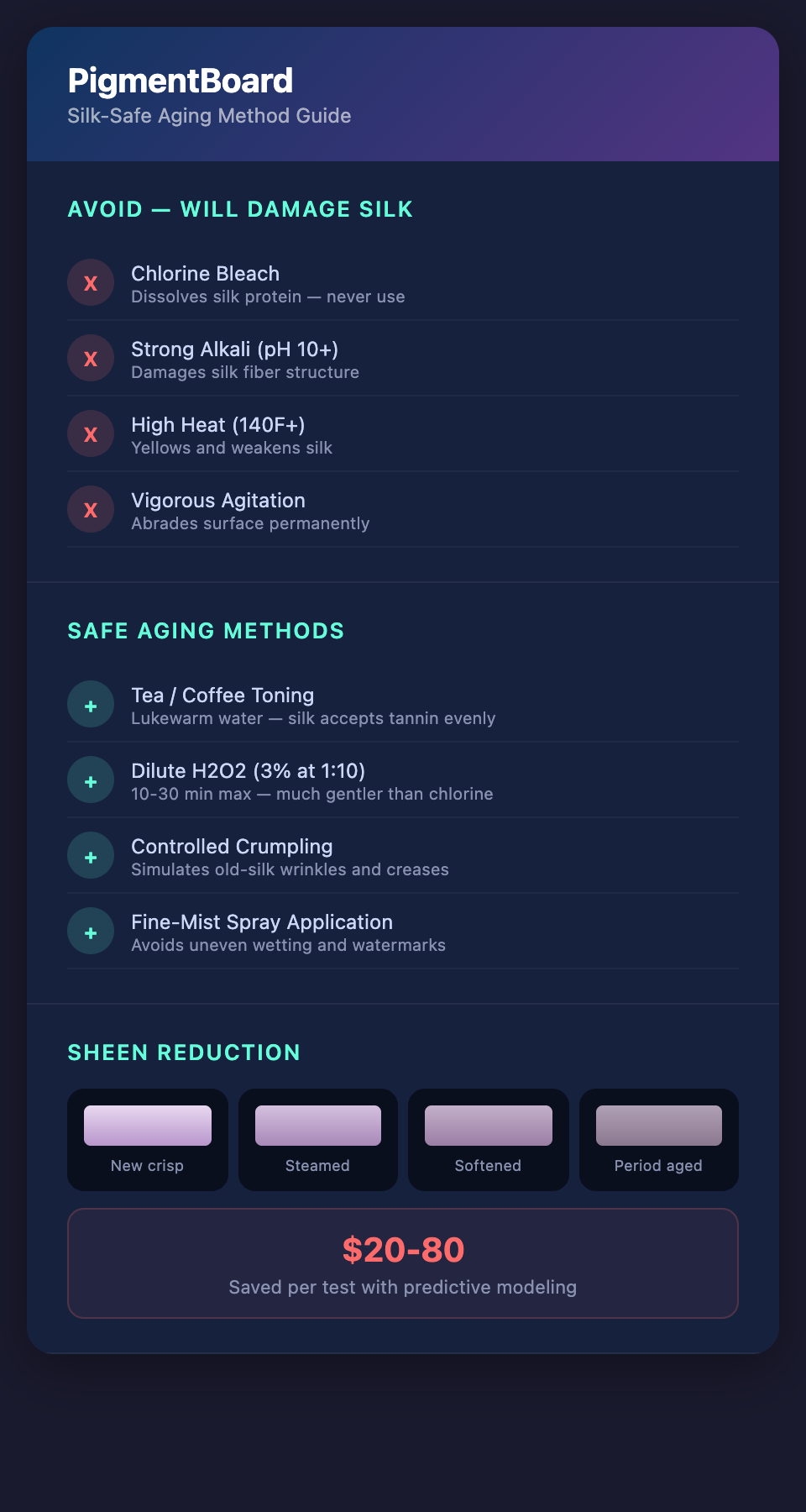
What Will Damage Silk
- Chlorine bleach — Dissolves silk protein. Never use.
- Strong alkali (pH above 10) — Damages silk fiber structure
- High heat (above 140°F/60°C) — Can yellow and weaken silk
- Vigorous mechanical agitation — Abrades the surface, creating a permanently rough texture
- Prolonged UV exposure — Degrades silk protein faster than cellulose fibers
Silk-Safe Aging Methods
Tea/coffee toning (safe): Works beautifully on silk. Use lukewarm (not hot) water. Soak time controls intensity. Silk accepts tannin toning evenly and retains a luminous quality.
Dilute hydrogen peroxide (use with care): For mild bleaching/fading effects. 3% hydrogen peroxide diluted 1:10 with water. Short exposure (10-30 minutes maximum). Rinse thoroughly. Much gentler than chlorine.
Gentle mechanical aging: Crumple and twist rather than sandpaper. The wrinkles and creases that develop in old silk can be simulated by controlled crushing. For satin, use a soft brush rather than sandpaper to dull the sheen in wear areas.
Spray application: Instead of immersion (which risks uneven wetting and watermarking), apply aging solutions with a fine-mist spray bottle. This allows controlled, even application.
Heat-induced yellowing (controlled): A warm iron (silk setting) pressed through a damp cloth can produce subtle yellowing. Test on scraps first — the line between "gently aged" and "scorched" is narrow.
Spirit-based staining: For localized effects (age spots, water marks), diluted alcohol-based stains penetrate silk quickly and evenly. Apply with a fine brush for precise placement.
The Sheen Question
New silk has a characteristic crisp sheen. Old silk has a softer, more subtle luster. Reducing the sheen to period-appropriate levels:
- Gentle abrasion with a soft cloth or very fine (600+ grit) sandpaper dulls the surface without damaging the fiber
- Steam relaxes the crisp finish of new silk
- Dilute fabric softener reduces surface tension and sheen slightly
- Strategic crumpling followed by gentle pressing creates a "lived-in" quality
Weighted Silk Considerations
Historical silk (particularly 1870s-1900s) was often weighted with tin salts to add body and reduce cost. Weighted silk is fragile — it shatters with age. For costumes representing aged weighted silk, consider:
- Using lightweight modern silk and aging it to suggest the beginning of the shattering process
- Creating deliberate small splits and tears in strategic locations
- Backing fragile areas with fine net for structural support
The Cost Factor
Silk is expensive. Failed aging experiments on silk are expensive failures. Degradation modeling that predicts the target color before any treatment touches the fabric is especially valuable for silk work — every avoided test saves $20-80 in fabric cost.
Want to predict silk aging effects before risking expensive fabric? Join the PigmentBoard waitlist.