How to Age Wool Broadcloth for 19th-Century Period Productions
The Broadcloth Standard
Wool broadcloth — a dense, fulled, napped wool fabric — was the standard for men's coats, uniforms, cloaks, and outerwear throughout the 19th century. Its aging is distinctive and recognizable.
How Broadcloth Ages
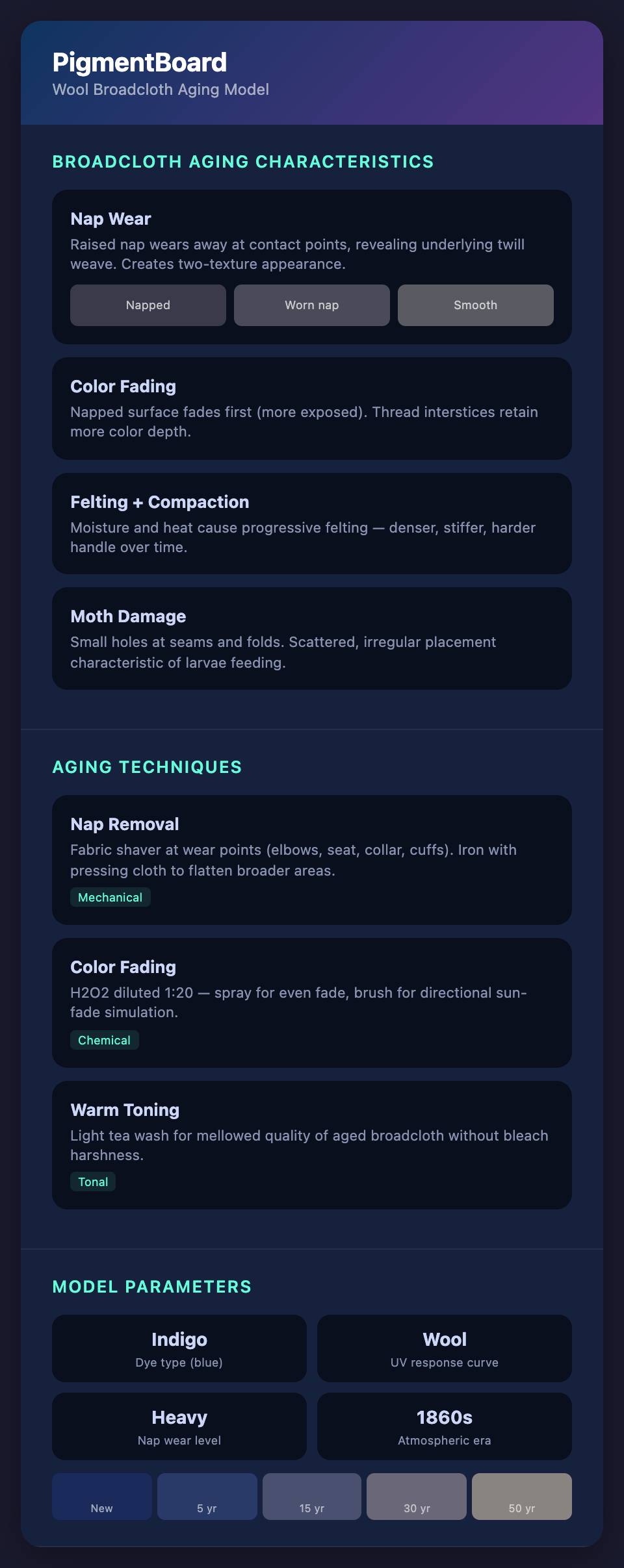
Nap wear. The raised nap that gives broadcloth its soft surface wears away with use, revealing the underlying twill weave. This creates a characteristic two-texture appearance: soft, napped areas in protected zones and smooth, shiny areas at points of contact.
Color fading. Dyes on wool are generally more resistant to UV than dyes on cotton, but prolonged exposure still causes fading. The napped surface fades first (more exposed to light), while the thread interstices retain more color.
Felting and compaction. Moisture and heat cause wool to felt, creating a denser, stiffer fabric over time. Well-worn broadcloth develops a harder, more compact handle than new fabric.
Moth damage. Wool is vulnerable to clothes moth larvae. Period broadcloth may show scattered small holes or thin areas from moth feeding.
Aging Techniques for Broadcloth
Nap removal: Use a fabric shaver or lint roller aggressively at wear points (elbows, seat, collar edge, cuffs). For broader areas, iron with a pressing cloth at higher temperature to flatten the nap.
Color fading: Use hydrogen peroxide (not chlorine bleach) diluted 1:20 for controlled fading. Apply by spray for even fading or by brush for directional sun-fade simulation.
Tea/coffee over-dyeing: For the warm, mellowed quality of aged broadcloth, a light tea wash adds appropriate warm toning without the harshness of bleach-faded fabric.
Felting effects: Wash in hot water with agitation to simulate decades of wear-induced felting. Control by monitoring the fabric closely — over-felting is irreversible.
Simulated moth damage: Small holes made with a seam ripper or hot needle, irregularly placed, concentrated at seams and fold areas where moths typically feed. Brush the edges for a soft, old look rather than a clean-cut hole.
The Model Approach
For broadcloth aging, the degradation model considers:
- Dye type (indigo for blue, logwood for black, madder for red)
- Fiber-specific degradation rate (wool's UV response curve)
- Nap wear level (light, moderate, heavy)
- Atmospheric exposure (smoke, pollution characteristic of the era)
The output predicts both the color change and the character of aging appropriate for the specific dye-on-wool system.
Want to model wool broadcloth aging with era-specific accuracy? Join the PigmentBoard waitlist.