Color Continuity Between Scenes in Film Costume Production
The Continuity Challenge
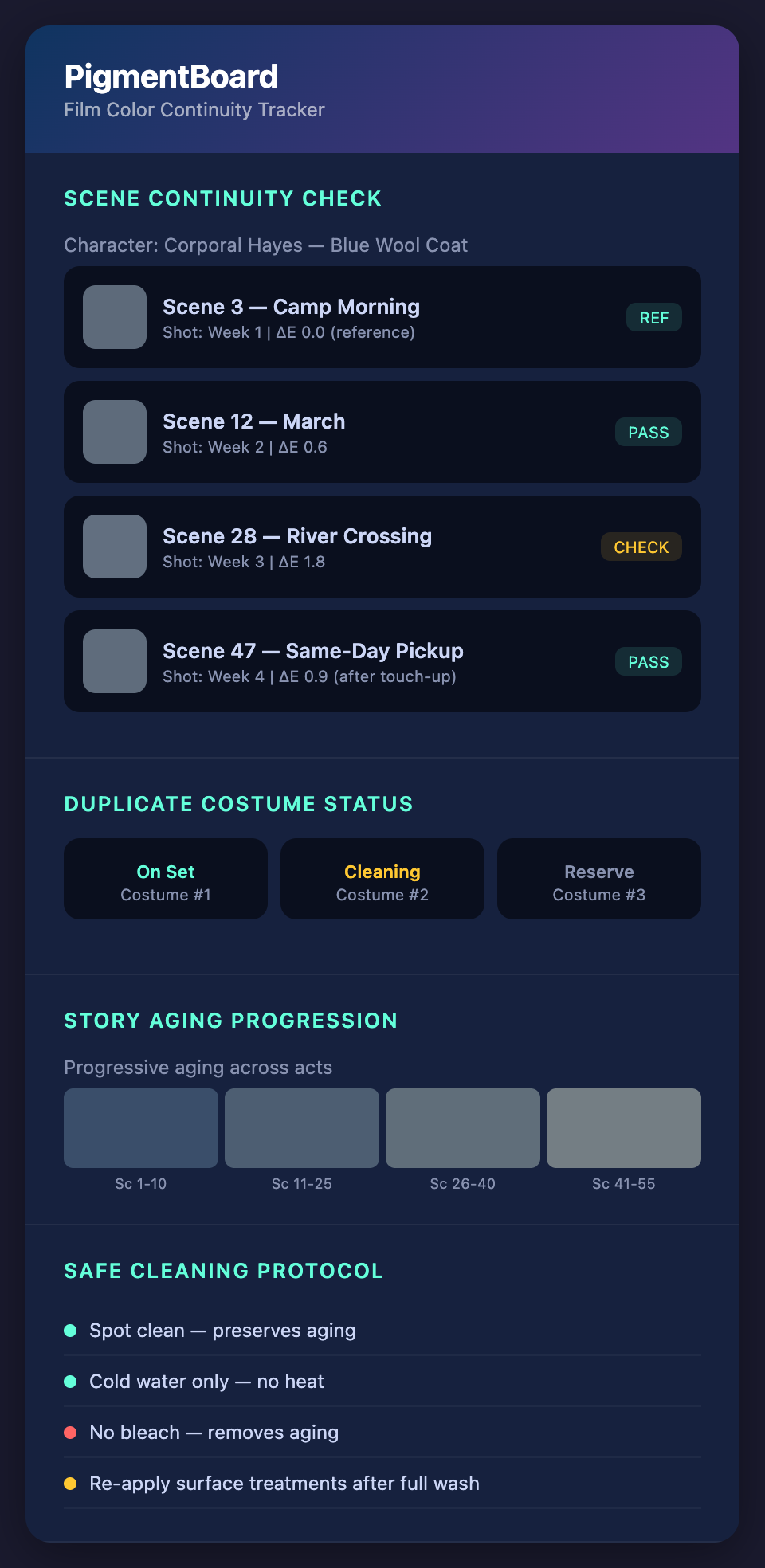
Film shoots scenes out of chronological order. Scene 3 and Scene 47 might be shot three weeks apart, but they are supposed to take place on the same day in the story. The character's costume must be identical in both scenes — same color, same aging, same wear.
For aged period costumes, this is especially challenging because the aging itself is complex and multi-layered.
What Can Change Between Shots
Laundry. Costumes worn by actors get sweaty, stained, and dirty. They must be cleaned between uses. Each cleaning can subtly shift color — especially on aged fabrics where surface treatments may be partially soluble.
Additional wear. Each wearing adds real wear to a costume that was artificially aged. The combination of artificial and real aging can shift the appearance.
Light and atmospheric exposure. Costumes stored between shoots in trailers, trucks, and warehouses may be exposed to light and atmospheric conditions that cause additional color change.
Repair and replacement. Damaged costumes may need parts replaced. The replacement pieces must match the aged appearance of the originals.
Continuity Management Strategies
Physical reference swatches. Cut a swatch from the hem allowance or an inconspicuous area of each aged garment. Store it sealed in a dark, stable environment. Use it as a comparison reference before each day of shooting.
Photographic reference. Photograph each costume under controlled lighting (D65, color card) at the start of the production. These photographs become the continuity standard.
Dedicated continuity person. For period productions with complex aging, assign one person to monitor costume color continuity. They check every costume before it goes on camera.
Cleaning protocols. Develop cleaning methods that preserve the aged appearance:
- Spot cleaning rather than full washing when possible
- Cold water rather than hot (which can remove aging treatments)
- No bleach (which removes aging)
- Steam rather than wet cleaning for delicate aging treatments
- Re-application of surface aging treatments after necessary full cleaning
Duplicate costumes. For principal characters, maintain 2-3 identical aged costumes:
- #1: Shooting
- #2: Cleaned and ready
- #3: Being prepared or in reserve
All duplicates must be aged to the same specification — which requires standardized recipes.
The Model's Role in Continuity
Degradation modeling supports continuity by:
- Defining the precise color target for each costume at each story point
- Enabling creation of identical duplicates
- Providing a measurable standard against which to check continuity
- Predicting how cleaning and additional wear will shift the aged color (so the dyer can compensate)
Story-Driven Aging Continuity
Some productions require costumes that age within the story — the character's clothing becomes more faded and worn as the plot progresses. This requires:
- Multiple versions of the same costume at different aging stages
- Consistent, progressive aging across versions
- Clear documentation of which version is used in which scene
A degradation model can generate progressive aging targets: "Scene 1-10: UV=3, wear=2. Scene 11-25: UV=5, wear=4. Scene 26-40: UV=7, wear=6." Each set of parameters produces a specific color prediction, ensuring that the progression looks natural and consistent.
Ready to lock in color continuity across your entire production schedule? Join the PigmentBoard waitlist.