Period Color Palettes for Elizabethan and Renaissance Productions
The Pre-Synthetic Palette
Before the 17th century, the European dye palette was limited to natural sources. This constraint produced a distinctive color world that audiences subconsciously associate with "the old days" — but only when the specific colors are historically correct.
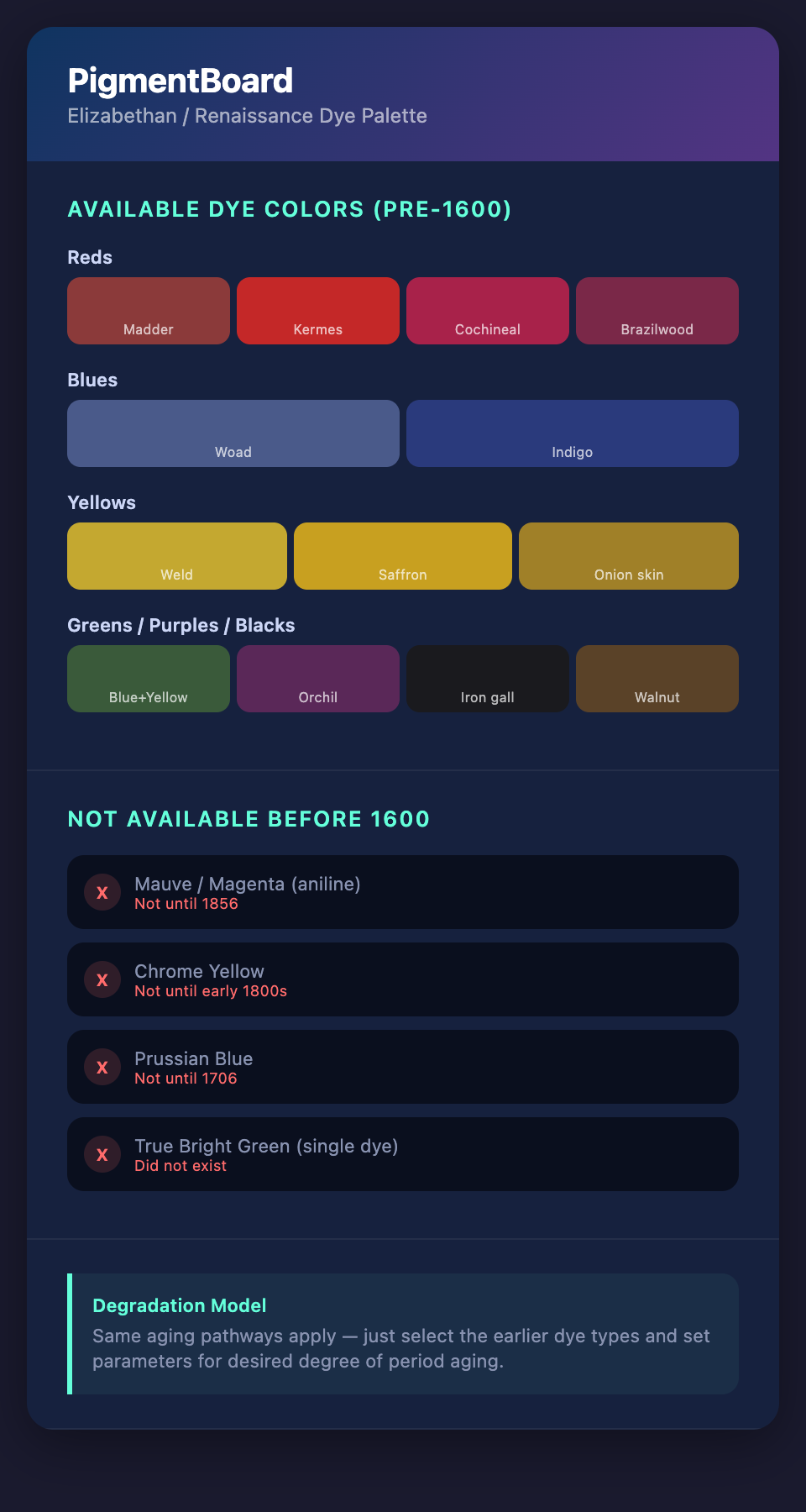
Available Colors by Source
Reds:
- Madder (alizarin): brick red to rose, depending on mordant
- Kermes: brilliant scarlet (expensive, reserved for the wealthy)
- Cochineal: after 1520s (imported from the Americas), brilliant crimson
- Brazilwood: purplish-red, not very light-fast
Blues:
- Woad: the only European blue dye. Pale to medium blue, often with a gray quality
- Indigo: imported, expensive, deeper blue than woad. Increasingly available through the period
Yellows:
- Weld (dyer's rocket): the clearest, most light-fast yellow
- Saffron: golden yellow (expensive)
- Onion skins: warm golden brown-yellow
- Many other local plant sources varying by region
Greens:
- Over-dyeing blue (woad/indigo) + yellow (weld) — the only reliable method
- No single green dye existed that was light-fast enough for textiles
Purples:
- Orchil/archil: reddish-purple from lichen (not very light-fast)
- Over-dyeing madder red + woad blue
- Murex (Tyrian purple): extremely expensive, largely symbolic by this period
Blacks:
- Iron gall (tannin + iron mordant): the standard black, with its associated fiber-damaging properties
- Over-dyeing dark blue + dark red: a rich, deep black used for fine garments
Browns:
- Walnut: warm brown
- Oak bark: tan to medium brown
- Cutch: reddish brown
What Was NOT Available
- Mauve, magenta, or aniline colors — Not invented until 1856
- Chrome yellow — Not available until the early 19th century
- Prussian blue — Not available until 1706
- True bright green from a single dye — Did not exist
- Consistent, even black — Logwood (the best black dye source) was not reliably available in Europe until the late 16th century
Aging Renaissance Colors
Natural dyes from this era have had 400-500 years to degrade (for surviving originals). For productions:
- If the costume represents "new" in the period, use the colors at full strength
- If the costume represents "worn" even within the period, natural dyes fade according to the same pathways discussed for 19th-century textiles — just with the earlier dye palette
The degradation model works identically — you just input the appropriate earlier dye types and set the degradation parameters for the desired degree of aging.
Working With Designers on Renaissance Color
Renaissance costume design is often influenced by paintings of the period. These paintings may show colors slightly differently from actual textile colors due to the painters' pigment choices and artistic interpretation. Help designers distinguish between "painting colors" and "textile colors" — they are related but not identical.
Ready to model Renaissance-era dye aging for your next period production? Join the PigmentBoard waitlist.