Quick-Turn Fabric Aging Methods for Tight Production Schedules
When Time Runs Out
Every costume shop has experienced the emergency aging request: a last-minute design change, a damaged costume that needs replacement, a new scene added to the script. You need authentically aged fabric in hours, not weeks.
Rapid Aging Methods
Bleach discharge (30-60 minutes): For cotton and linen, sodium hypochlorite in a controlled bath rapidly removes dye. Monitor constantly — over-bleaching cannot be reversed. Neutralize with sodium thiosulfate.
Tea/coffee bath (1-2 hours): Strong brewed tea or coffee in a hot bath adds warm aging tint quickly. The longer the soak and the stronger the brew, the darker the tint. Works on all natural fibers and most synthetics.
Iron water treatment (1-3 hours): Dissolve steel wool in vinegar (prepare in advance — it takes 24 hours to dissolve). The resulting iron acetate solution darkens tannin-dyed fabrics and adds a gray-brown aging tone to most natural fibers.
Spray aging (1-2 hours): Diluted acrylic paint or fabric dye in a spray bottle, applied in thin layers. Allows localized aging (darker in folds, lighter on highlights). Fast-drying with a heat gun.
Sandpaper and pumice distressing (30 minutes per garment): Physical wear simulation. Best on cotton and linen. Gentle on silk (use only the finest grit). Avoid on loosely woven fabrics.
Steam and heat (15-30 minutes per garment): A hot iron or steam can produce localized yellowing on some fabrics. Also relaxes the "new" crispness of unworn fabric.
The Fast Model Workflow
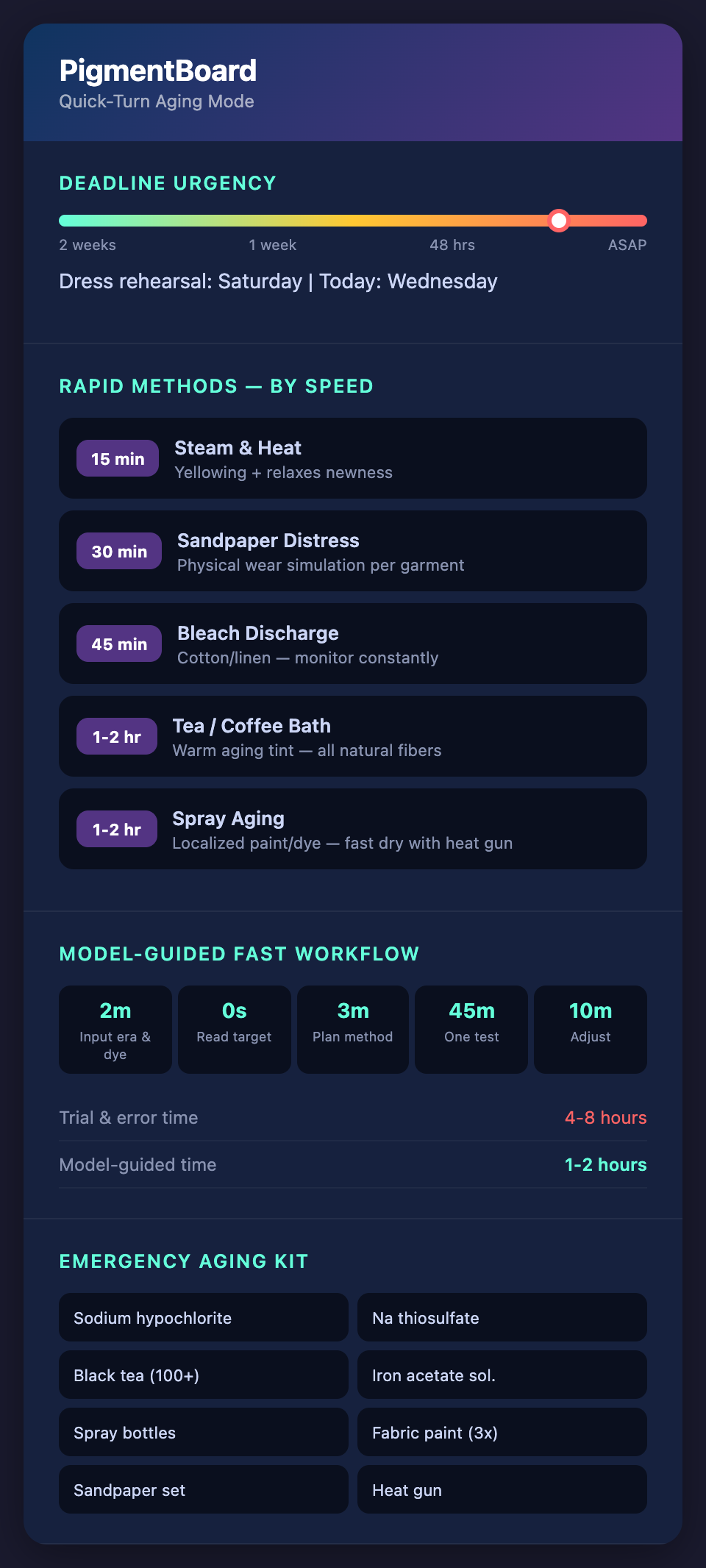
Even under time pressure, 10 minutes with a degradation model saves hours of trial and error:
- Input the era, dye type, and desired aging level (2 minutes)
- Read the predicted target color (instant)
- Choose the fastest method that achieves the predicted color shift (3 minutes of planning)
- Execute one targeted test (30-60 minutes)
- Adjust if needed (usually minor)
- Process the full garment or run
Total: 1-2 hours instead of the 4-8 hours that pure trial and error typically requires under pressure.
Emergency Aging Kit
Keep a pre-assembled emergency aging kit in your shop:
- Sodium hypochlorite (household bleach)
- Sodium thiosulfite (bleach neutralizer)
- Strong black tea bags (at least 100)
- Iron acetate solution (pre-made, stored in glass)
- Spray bottles (multiple, labeled)
- Diluted fabric paint (brown, gray, yellow — pre-mixed at aging concentrations)
- Sandpaper (multiple grits: 120, 220, 400)
- Pumice stones
- Heat gun
- Nitrile gloves, apron, and eye protection
When Quick-Turn Is Not Enough
Some aging effects cannot be rushed:
- Natural sun fading (requires days to weeks of exposure)
- Deep vat dyeing (requires hours of immersion for full penetration)
- Natural wear patterns (require actual wearing or extended tumbling)
For these effects, plan ahead. Start aging processes for upcoming productions as early as possible, even before final design approval. You can always adjust a partially aged fabric, but you cannot compress natural processes into hours.
Want to hit emergency aging targets on the first attempt? Join the PigmentBoard waitlist.