Reusing Aged Costume Fabrics Across Multiple Productions
The Second Life of Aged Fabric
When a production closes, aged costumes and fabrics face three fates: disposal (wasteful), generic storage (lost and forgotten), or systematic cataloging for reuse (valuable). The third option transforms a production expense into a long-term asset.
Why Reuse Makes Sense
Cost recovery. The aging process represents significant investment in materials, chemicals, labor, and time. Reusing aged fabric amortizes that cost across multiple productions.
Authentic aging. Fabric that was artificially aged for Production A and then stored for two years has gained real aging on top of the artificial aging. It looks increasingly authentic over time.
Speed. Starting with pre-aged fabric eliminates the aging development process for subsequent productions.
Cataloging for Reuse
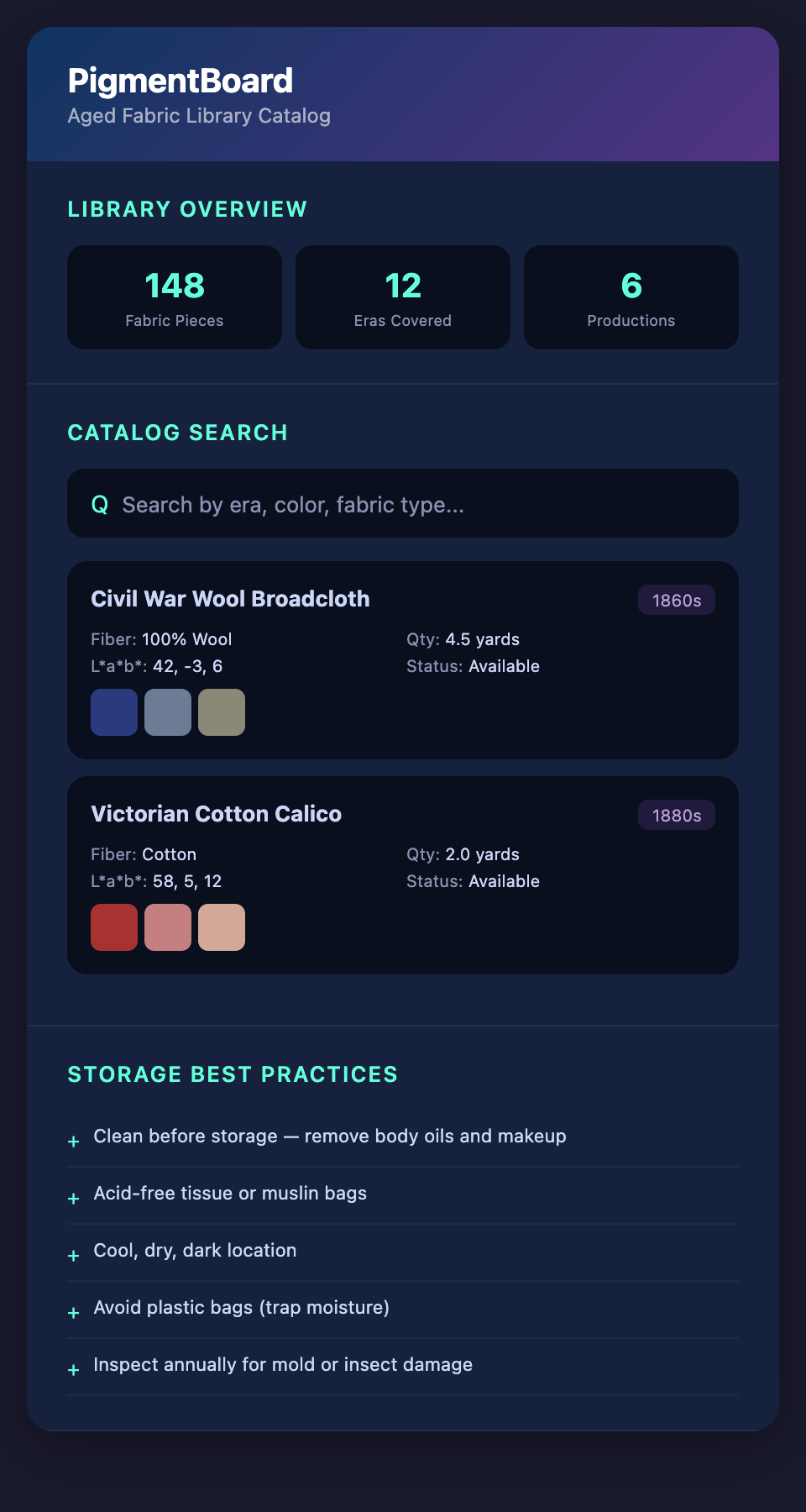
Create a searchable inventory of aged fabric and costumes:
For each piece, record:
- Fabric type and fiber content
- Original color before aging
- Aging treatment applied (method, recipe reference)
- Current color (Lab* or Munsell, plus photograph)
- Quantity (yardage or garment type/size)
- Condition (any damage, staining, or limitations)
- Production history (which shows used it)
- Storage location
Organization options:
- Physical: Label and store by era, then by color family
- Digital: Database or spreadsheet searchable by era, color, fabric type, quantity
Storage for Preservation
Aged fabric should be stored properly to prevent deterioration:
- Clean before storage (gentle wash to remove body oils, makeup, and stage grime)
- Store in acid-free tissue or muslin bags
- Keep in a cool, dry, dark location
- Avoid plastic bags (which trap moisture)
- Inspect annually for mold, insect damage, or deterioration
Matching Existing Stock to New Productions
When a new production needs aged fabric:
- Search the catalog for matching era, color, and fabric type
- Pull candidate pieces and compare to the new production's requirements
- Adjust if needed (additional aging, slight color modification)
- This is faster and cheaper than aging new fabric from scratch
The Growing Asset
Over years, a well-managed aged fabric library becomes increasingly valuable:
- More eras and styles are covered
- Fabrics that have genuinely aged look more authentic than newly aged fabric
- The library represents accumulated production knowledge and investment
- New productions can be equipped faster and at lower cost
Want to catalog your aged fabric library with degradation-model color data? Join the PigmentBoard waitlist.