Simulating Period Laundry Effects on Costume Fabrics
Laundry Changed Fabric Color
Historical laundry methods were not just different from modern methods — they actively changed fabric color in specific, predictable ways. A garment that was washed weekly for five years in the 1860s underwent chemical treatments that are part of its aging story.
Period Laundry Methods and Their Effects
Lye soap (pre-1900 standard): Made from animal fat and wood ash lye (potassium hydroxide). Strongly alkaline (pH 10-12). Effects on dyed fabric:
- Alkalinity shifts pH-sensitive dyes (madder red shifts toward purple in alkaline conditions)
- Strips unfixed dye from fibers over repeated washings
- Gradually lightens all colors
- Creates a characteristic "soft" quality in the fading (different from UV fading)
River or stream washing: Natural water contains minerals and organic compounds that affect dye:
- Hard water (calcium/magnesium) can deposit on fibers, creating a dulling effect
- Iron-rich water can add a warm cast
- Mechanical beating on rocks creates localized wear and dye loss
Sun bleaching (line drying): Wet fabric exposed to direct sun undergoes accelerated photodegradation:
- UV damage is enhanced when the fabric is wet (water facilitates photo-oxidation)
- Directional fading: the sun-facing side fades more
- Especially effective at fading indigo, which is why historical indigo-dyed garments show significant laundry-related fading
Bluing agents: Added to the final rinse to counteract yellowing. Creates a slight blue-violet cast. Used primarily on white linens.
Simulating Period Laundry Effects
Lye soap wash: Use actual lye soap (available from craft suppliers) or simulate with a sodium carbonate solution (pH 10-11). Soak dyed fabric at warm temperature for 1-2 hours. Repeat multiple cycles to simulate years of washing.
Hard water simulation: Add calcium chloride to the wash water. The mineral deposits dull the fabric's apparent color.
Sun bleaching: Wet the fabric and hang in direct sunlight. Rotate for even exposure. One full day of wet sun exposure can approximate months of weekly line-drying.
Combined cycle: For authentic simulation, combine: lye soap wash → rinse → sun dry → repeat. Three to five full cycles approximate years of period laundry.
The Degradation Model Application
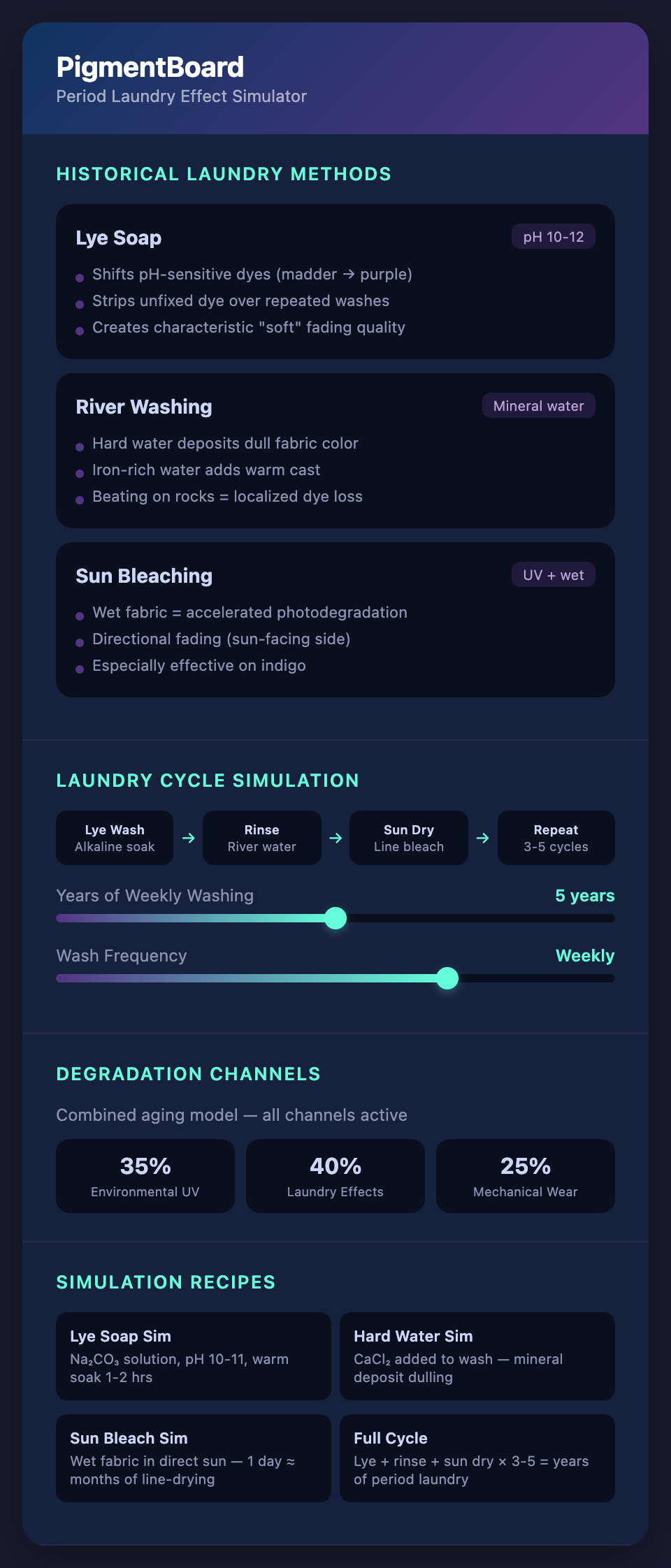
Period laundry is another degradation channel — separate from environmental UV, atmospheric oxidation, and mechanical wear. A complete aging model for a costume should include:
- Environmental aging (UV, humidity, pollutants) for the years between launderings
- Laundry aging (alkaline wash, sun bleaching) based on estimated washing frequency
- Mechanical wear from use between launderings
Each channel contributes to the final aged color. The model combines them for a comprehensive prediction.
Ready to model the complete aging story — environment plus laundry plus wear? Join the PigmentBoard waitlist.