How Storage Materials Off-Gas and Alter Textile Pigments
The Danger Inside the Box
You have controlled your gallery lighting, managed your humidity, filtered your air. But the materials used to store textiles can release volatile organic compounds and acids that accumulate in enclosed storage environments and attack textile pigments.
What Off-Gases
Acidic cardboard and paper release acetic acid, formic acid, and formaldehyde from lignin breakdown. Wood (especially oak, plywood, MDF) releases acetic acid and formaldehyde. Adhesives release acetic acid or formaldehyde depending on type. Rubber releases sulfur compounds. Certain plastics like PVC release hydrochloric acid.
How Off-Gassing Affects Pigments
Acid hydrolysis breaks bonds in pH-sensitive dyes, shifting madder toward orange. Formaldehyde cross-links proteins and causes general yellowing. Sulfur compounds blacken silver threads and darken lead pigments. VOCs can catalyze accelerated oxidation in concentrated microenvironments.
Identifying Off-Gassing Damage
Look for uniform discoloration within enclosed spaces, damage concentrated at contact points, tidemarks from acid migration, unexplained metal tarnishing, and vinegar or sharp chemical smells when opening storage boxes.
Implications for Color Matching
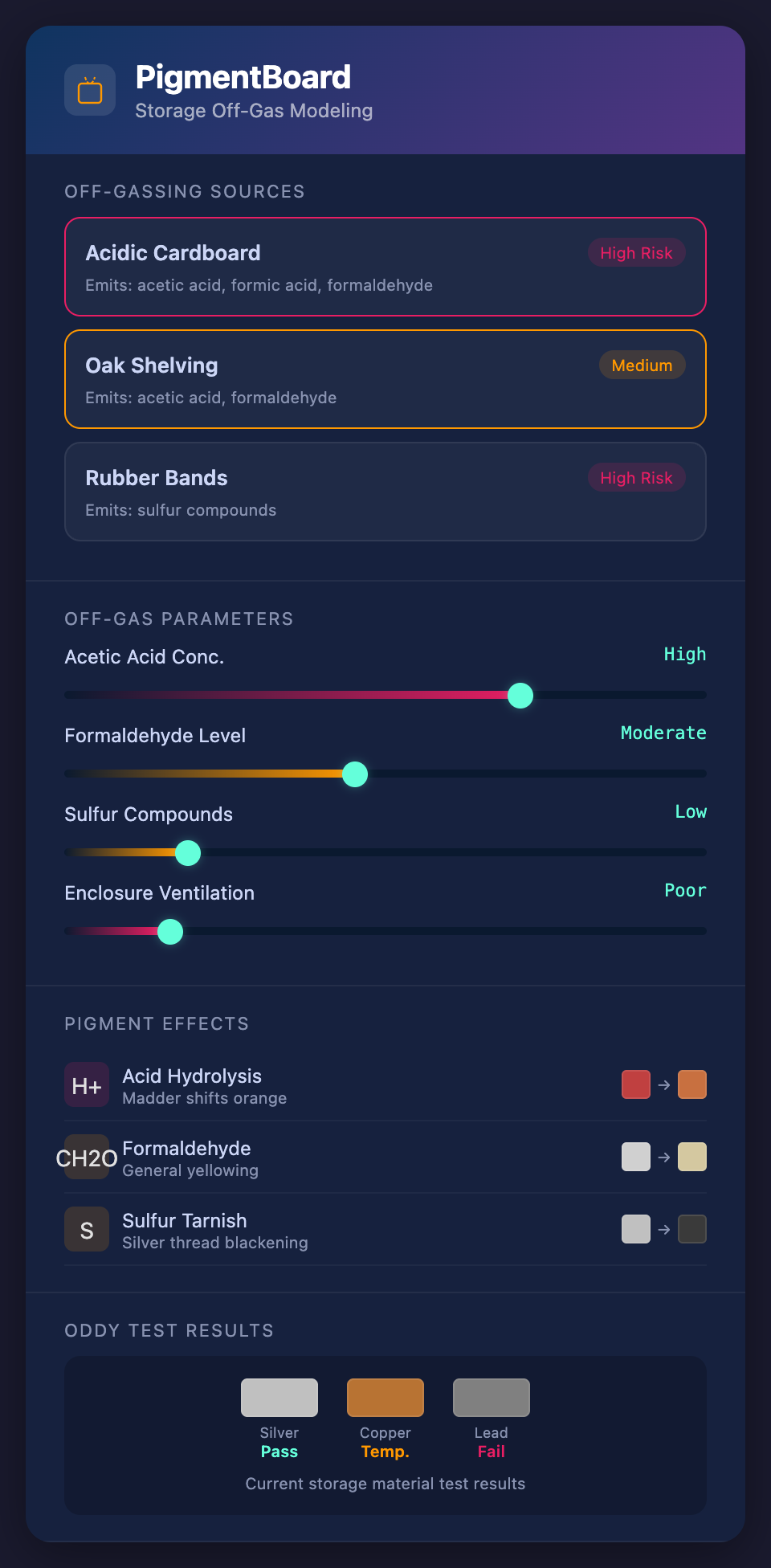
Acid-shifted colors need pH modeled as a variable. Formaldehyde yellowing adds a warm shift independent of dye degradation. Contact damage creates localized changes. Metal-sulfide tarnishing requires different matching approaches.
Prevention
Replace non-archival materials with acid-free alternatives. Remove rubber bands and non-archival tissue. Add activated carbon to storage enclosures. Ensure air circulation. Test new materials with Oddy tests before introducing them.
Want to model every degradation factor including storage off-gassing? Join the PigmentBoard waitlist.