Authenticating Textiles With Known Comparison Examples
The Gold Standard: Direct Comparison
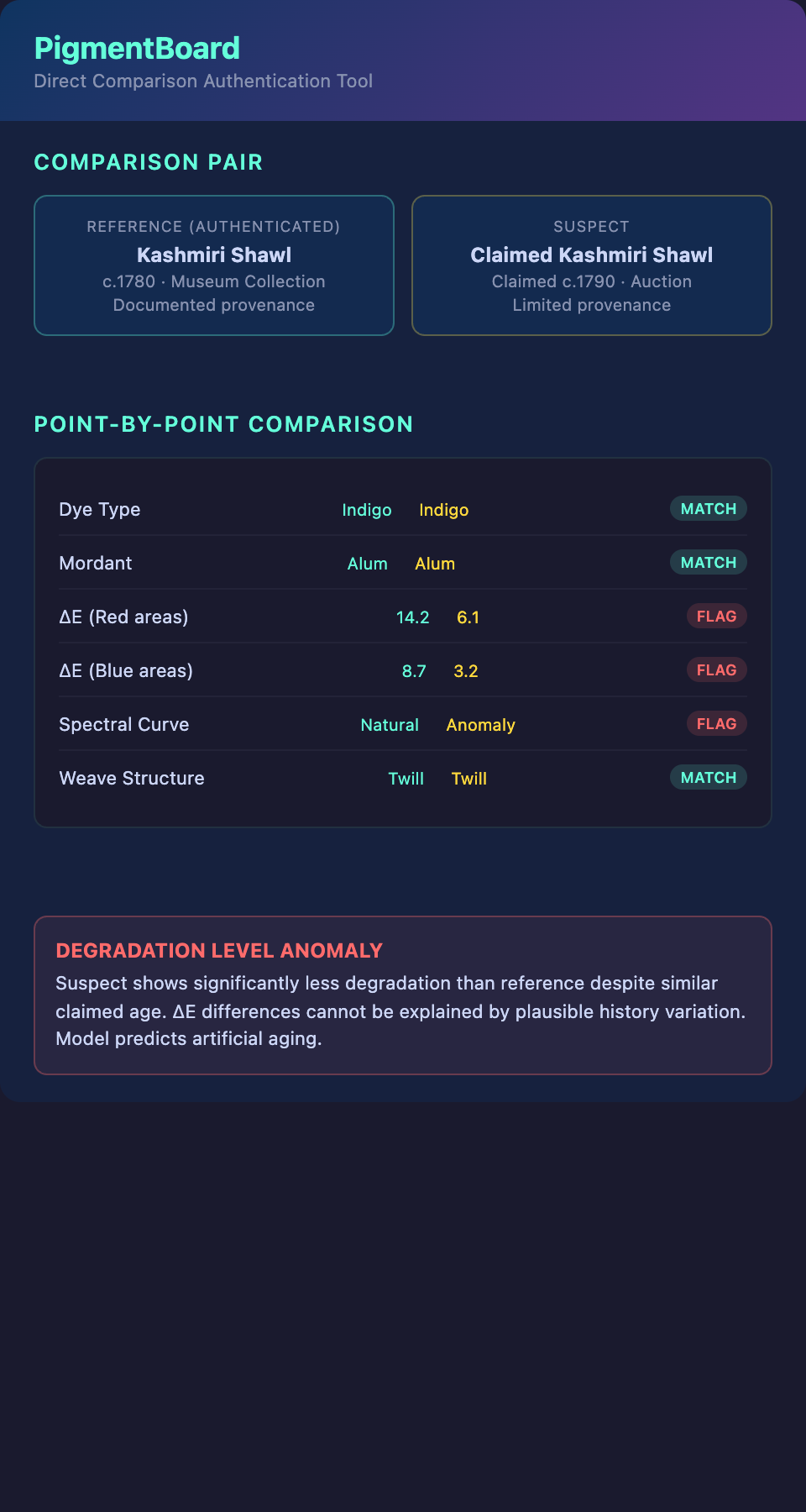
The most straightforward authentication scenario is when a known, authenticated example of the same textile type exists for direct comparison. If you are evaluating a claimed 18th-century Kashmiri shawl and can compare it directly to an authenticated example from a museum collection, the assessment is grounded in physical evidence.
Setting Up the Comparison
Physical comparison (if possible): Place the suspect and reference textiles side by side under identical controlled lighting. Compare color, texture, weight, handle, and construction.
Spectral comparison: Measure both textiles with the same instrument, same settings, same lighting. Compare reflectance curves point by point.
Degradation comparison: Both textiles should show similar degradation patterns if they are of similar age and have experienced similar conditions. If the reference has a documented history and the suspect has a claimed history, the degradation model predicts what differences to expect based on the different histories.
What Differences Are Expected
Even two genuine textiles of the same type and age will show differences:
- Different exposure histories produce different degradation levels
- Different dye lots may have used slightly different dye concentrations
- Natural material variation (fiber quality, yarn construction) creates baseline differences
- Different repairs and maintenance create different current conditions
The model helps distinguish between expected differences (consistent with different but plausible histories) and anomalous differences (inconsistent with any plausible history).
When the Comparison Fails
If the suspect textile differs from the reference in ways that cannot be explained by different but plausible histories, the suspect is flagged:
- Dye type different from the reference (suggests different production tradition)
- Degradation level inconsistent with the claimed age difference
- Construction details inconsistent with the reference's tradition
- Spectral signature inconsistent with natural aging of the same dye
Building Comparison Resources
Not every authentication case has a convenient reference example. Build your comparison resources by:
- Documenting every authenticated textile you examine
- Building relationships with museums that allow research access
- Collecting published spectral data and degradation studies
- Using the degradation model to simulate comparison examples when physical ones are unavailable
Want to generate model-based comparison examples when physical references are unavailable? Join the PigmentBoard waitlist.