Managing Unexpected Site Complications During Teardown
Why Sites Never Go Exactly to Plan
Demolition projects are archaeological expeditions. You uncover the building's secrets as you dismantle it. Earlier renovation phases may have added hidden structural elements. Previous repairs created unexpected reinforcement. Deterioration affected load-bearing capacity differently than drawings suggested.
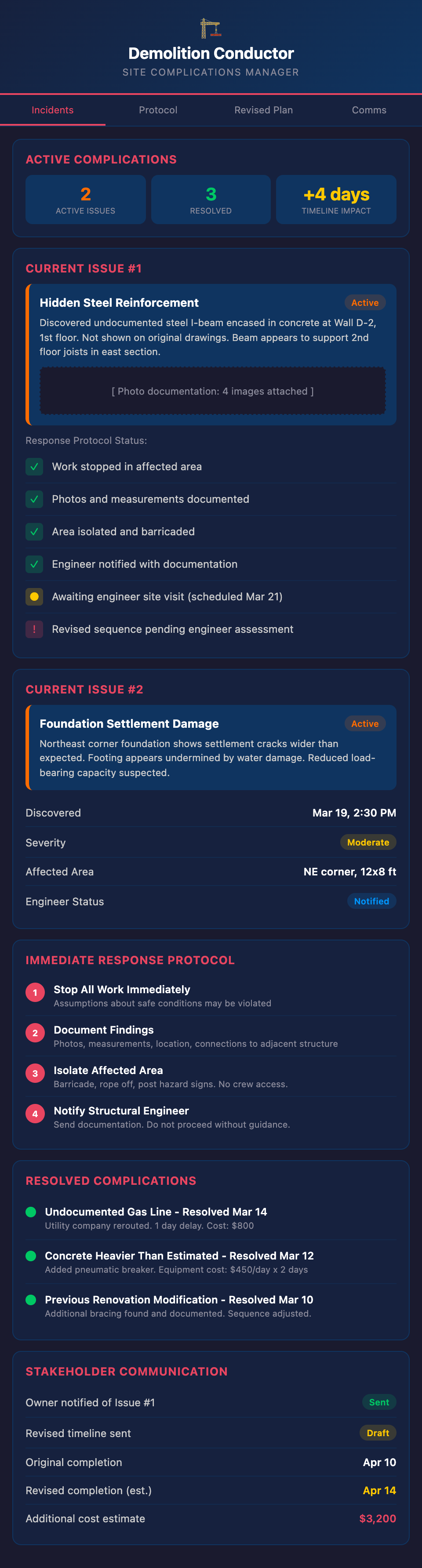
Experienced contractors expect complications. The ones who fail are those who discover complications and continue as if nothing changed.
Categories of Site Surprises
Hidden Structural Elements
Previous renovations may have added steel reinforcement, concrete columns, or bracing not shown in drawings. You discover these only when you start removing what you thought was non-structural.
Deterioration Beyond Prediction
Decades of water intrusion, settlement, or material fatigue degrade structural capacity beyond what visual inspection and testing reveal. An element you expected to be solid may be failing internally.
Undocumented Modifications
Buildings change over their lifespans. Additions reinforce certain areas. Load-bearing walls get partially removed. Floors get supported differently. Those modifications created dependencies that original drawings don't show.
Unexpected Foundation Conditions
Soil settlement, water damage, or previous structural repair may have compromised foundation integrity more than surface conditions suggest.
Concealed Utilities and Hazards
Buried electrical conduit, asbestos encapsulation, lead paint, and underground utilities appear unexpectedly during demolition.
The Immediate Response Protocol
When you discover something unexpected, implement this protocol:
1. Stop All Work Immediately
This isn't overcautious. The unexpected condition means your assumptions about what's safe have been violated. Continue working based on incorrect assumptions and you risk disaster.
2. Document What You Found
Take photographs and measurements of:
-
The unexpected element's location and size
-
What you were removing when you discovered it
-
How it connects to adjacent structures
-
Any visible damage or deterioration
-
Any materials used in construction
This documentation helps your engineer assess the situation.
3. Isolate the Affected Area
Mark the area where unexpected conditions exist so crews don't accidentally interact with it. Rope off or barricade the zone. Post hazard signs.
4. Notify the Structural Engineer
Send your engineer the documentation and describe what happened. Include:
-
What you expected to find
-
What you actually found
-
How it differs from original plans
-
Whether anyone was endangered
-
What you plan to do next
Do not proceed without engineer guidance.
Engineering Assessment and Plan Revision
Your engineer will:
-
Assess the unexpected element to understand its function and capacity
-
Re-evaluate load paths with this new information
-
Identify whether it affects your planned sequence or creates new hazards
-
Recommend modified procedures to handle the new situation
-
Specify any additional temporary support needed
This typically takes a few days. The cost of this consultation is minimal compared to the risk of proceeding incorrectly.
Common Complications and Solutions
Undocumented Steel Reinforcement
Solution: The steel may reinforce an element you thought was non-load-bearing. Your engineer will determine if the element is structural and adjust your sequence accordingly.
Concrete Encasing Hidden Beams
Solution: Concrete may encase steel beams providing critical support. Removing the concrete without proper support can fail the beam. Shoring or reinforcement becomes necessary.
Settlement-Damaged Foundations
Solution: Foundations damaged by settlement may have reduced capacity. Remove loads more slowly and carefully. Install additional temporary support to prevent failure of the weakened foundation.
Asbestos or Hazardous Materials
Solution: Stop work. Bring in specialists for hazardous material abatement before continuing. These materials require certified contractors and add time and cost to projects.
Communicating Changes to Stakeholders
Project delays due to complications frustrate building owners and project managers. Manage expectations by:
-
Explaining the risk that proceeding without investigation would have created
-
Presenting the engineer's recommendation as expert judgment, not contractor conservatism
-
Providing revised timeline showing when you can resume work
-
Showing the cost trade-off between minor investigation delays and major problems
Most stakeholders appreciate contractors who discover problems early rather than causing collapses.
Building Flexibility Into Your Timeline
Professional contractors build investigation time into project schedules. If your contract specifies 10 weeks, calculate 2 weeks for unexpected complications. This isn't padded profit—it's realistic risk management.
Your orchestration tool should flag potential risk areas during planning, so you can communicate timing flexibility upfront.
The Professional Advantage
Contractors who manage complications professionally earn trust and referrals. Those who either ignore complications or panic build reputations for unreliability.
Professional orchestration means building flexible plans with risk assessment, so complications become manageable adjustments rather than project disasters.
Join our waitlist for early access to the planning tools that prepare you for what you don't yet know about your site.