Reducing Rework Through Better Pre-Demolition Planning
The Economics of Rework
Rework represents pure profit loss. You remove an element, discover a dependency you missed, and have to remove it again or reinforce it. Your crew's time multiplies costs. Equipment sits idle. Schedule delays cascade to later phases.
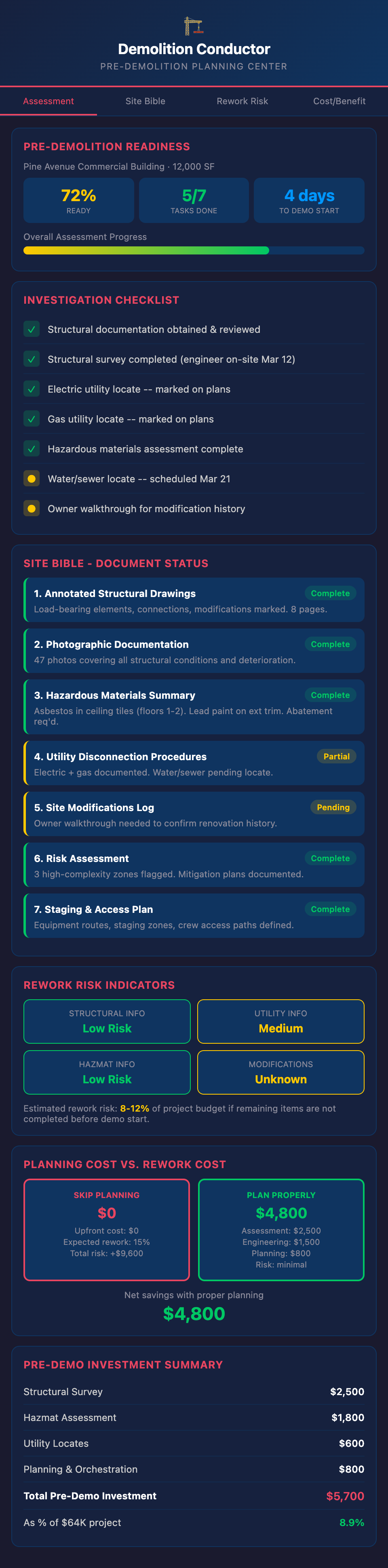
Studies of construction failure costs show rework accounts for 10-15% of typical project budgets. For demolition contractors with tight margins, this transforms potential profit into loss.
The solution isn't hustling harder. It's planning better before work begins.
What Causes Demolition Rework?
Incomplete Information About Structural Dependencies
You remove what you think is non-structural; it was actually bracing a critical element. You have to reinstall it or brace the element it was supporting.
Inaccurate Material Identification
The drawing says concrete block; it's actually reinforced concrete. You can't remove it with simple hand tools. You need pneumatic breakers and additional time.
Missing or Incorrect Site Drawings
The building has been modified since original construction. Your demolition sequence assumes original configuration. Mid-project you discover modifications that change what can be removed safely.
Incomplete Utility Locates
You uncover electrical, plumbing, or gas lines during demolition. Work stops while utilities are relocated. Adjacent demolition can't proceed safely during utility work.
Undiscovered Hazardous Materials
Asbestos, lead paint, or other hazardous materials require professional abatement before demolition can continue. Discovering these mid-project requires stopping work and bringing in specialists.
The Pre-Demolition Investigation Phase
Professional contractors invest in thorough pre-demolition assessment. This phase takes 1-2 weeks but eliminates months of rework risk.
Structural Documentation
Obtain the original building design drawings if available. If not available or incomplete, commission a structural survey. A structural engineer or experienced architect performs:
-
Visual inspection of all structural elements
-
Measurement and documentation of significant elements
-
Assessment of connections between elements
-
Evaluation of apparent modifications to original structure
-
Identification of deterioration or damage affecting capacity
-
Marking of load-bearing vs. non-load-bearing elements for crew reference
Cost: $1,500-3,000 depending on building size and complexity. Value: Prevents 10+ times this cost in rework.
Utility Locates and Documentation
Initiate utility locates with:
-
Electric utility company (typically free)
-
Gas utility company (typically free)
-
Water and sewer authority (may charge $100-500)
-
Telephone/data providers (typically free)
-
Private utility locators for systems not handled by public utilities ($500-2,000)
Mark all utilities on site plans. Identify how they pass through structures and what disconnection procedures exist.
This prevents discovering a live electrical line during wall removal or hitting a pressurized gas line with a sledgehammer.
Hazardous Materials Assessment
Survey the building for:
-
Asbestos in insulation, flooring, ceilings
-
Lead paint in older buildings
-
PCBs in old electrical equipment
-
Underground storage tanks for fuel oil or other substances
Cost: $1,000-3,000 for complete assessment. Value: Avoids $10,000+ for emergency abatement and project shutdown.
Site Modifications Documentation
Walk the building with building owner or occupants who know its history. Identify:
-
Additions and modifications after original construction
-
Walls that have been modified or removed
-
Reinforcement added for equipment or operational purposes
-
Areas that are more heavily used suggesting structural reinforcement
Photograph everything and mark modifications on your plans.
Creating the Pre-Demolition Site Bible
Compile all investigation results into a single site-specific document:
-
Annotated drawings showing structural elements, utilities, and hazardous materials
-
Photographic documentation of significant structural conditions
-
Hazardous materials summary with locations and abatement requirements
-
Utility disconnection procedures with contact information
-
Identified modifications to original structure with implications
-
Risk assessment highlighting areas of complexity
-
Staging and access plan showing where equipment will operate
Every crew member reviews this document. Questions are asked and answered before work begins.
Using Pre-Demolition Data in Project Planning
Your orchestration tool should incorporate pre-demolition findings:
-
Hazard zones marking hazardous material areas requiring special procedures
-
Utility shutdown sequences before removing elements containing utilities
-
Load path diagrams showing structural dependencies
-
Complexity indicators flagging areas requiring additional expertise or care
-
Sequence modifications based on actual site conditions vs. original assumptions
This transforms generic demolition plans into site-specific orchestration.
The Time-Cost Trade-Off
Pre-demolition planning takes time and costs money upfront. But compare:
Option A: Rush to work, rework later
-
Start immediately, minimal pre-planning: $0
-
Discover issues during work: crews idle, rework required
-
Total cost: Original bid + 15% rework costs
Option B: Plan properly, work clean
-
Pre-demolition investigation: $3,000-5,000
-
Thorough planning: $1,000 in orchestration/design
-
Work proceeds smoothly with minimal surprises
-
Total cost: Original bid + $4,000-6,000
Option B costs 5-10% more but delivers the project on schedule and often ahead of budget by avoiding rework penalties.
Start Planning Before You Break Ground
The best time to plan your demolition is before demolition begins. Professional contractors know that planning investment prevents rework costs.
Join our community of contractors using intelligent pre-demolition planning to deliver projects cleanly, on schedule, and profitably.
Sign up for our waitlist and receive a pre-demolition assessment checklist that ensures you don't miss critical planning steps.