Specialized Sequencing for Historic Structure Preservation
The Unique Challenge of Historic Demolition
Historic buildings demand different demolition approaches. You're not trying to demolish the entire structure efficiently—you're trying to remove selected elements while preserving the building's historic integrity and character.
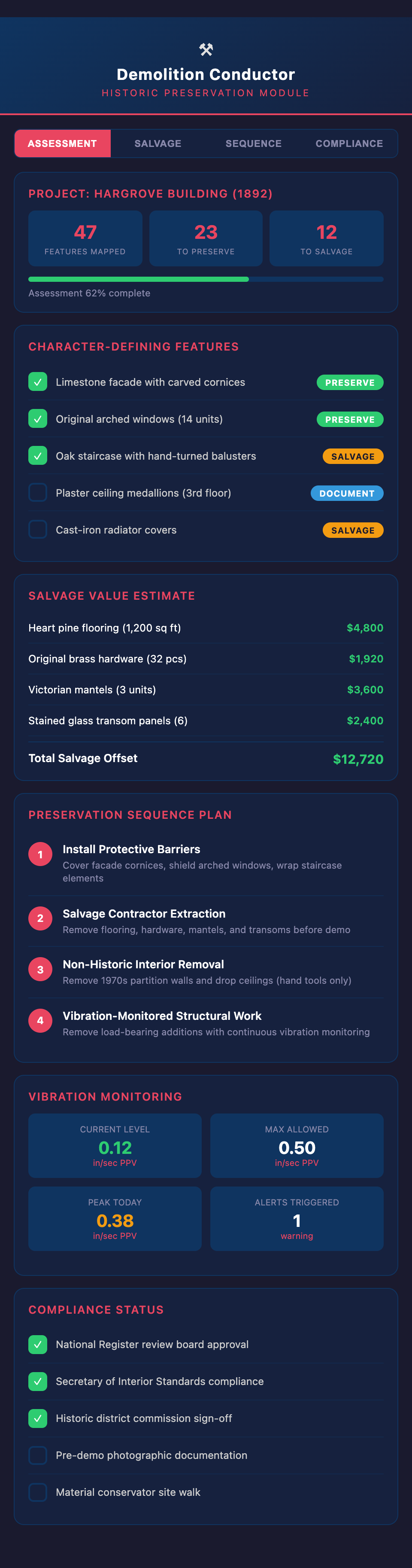
This requires understanding not just what's structurally necessary but what's architecturally significant.
Understanding Historic Value
Historic buildings derive value from:
-
Original materials and construction techniques
-
Character-defining features like cornices, arches, original windows
-
Authentic patina and evidence of age
-
Structural configuration reflecting historical construction periods
-
Craftsmanship visible in details like plasterwork or millwork
Demolition for renovation must preserve these elements or document them thoroughly if removal is necessary.
The Preservation Assessment Process
Before beginning any demolition on a historic structure, commission a preservation assessment that identifies:
Character-Defining Features
Elements that create the building's historical identity:
-
Façade details and exterior materials
-
Window and door configurations
-
Roof shapes and materials
-
Interior finishes and details
-
Original structural systems visible in interior spaces
Areas of Deterioration
Where historic preservation concerns conflict with structural necessity:
-
Damaged character-defining features requiring removal
-
Deteriorated materials threatening structural integrity
-
Previous non-historic modifications that can be removed without loss
Sequencing Implications
How preservation goals shape your demolition sequence:
-
Elements that must be protected during work
-
Materials that should be salvaged rather than discarded
-
Access routes that minimize impact on protected areas
-
Temporary protection measures for vulnerable elements
Material Salvage as Part of Demolition
Historic structures contain materials and elements with genuine value:
-
Original hardwood flooring and trim salvageable for reuse
-
Hardware, hinges, and fixtures with authentic period character
-
Architectural salvage items like mantels, staircase elements, doors
-
Glass, tiles, and other materials matching original specification
Professional demolition companies engaged in historic work coordinate with salvage specialists who remove valuable items before general demolition proceeds.
This requires:
-
Identifying salvageable elements during assessment
-
Engaging salvage contractors early in planning
-
Planning access routes for salvage removal
-
Sequencing salvage removal before structural demolition
-
Documenting salvaged items for future reference or reuse
The Economics of Salvage
Salvage operations cost money and require extra time. But:
-
Salvaged materials can offset costs if sold to antique dealers or architectural salvage retailers
-
Reuse within the project preserves historic character while avoiding replacement material costs
-
Tax deductions may apply to salvaged materials donated to preservation organizations
-
Preservation compliance may be impossible without salvage (preservationists won't accept modern replacement materials)
Protection and Temporary Support Systems
Historic structures require specialized temporary support:
Protecting Character-Defining Features
-
Erect protective barriers around exterior details
-
Cover ornamental plasterwork during interior demolition
-
Protect original windows from debris and vibration
-
Prevent mortar dust from accumulating in decorative elements
Vibration Control
Historic masonry is fragile. Demolition vibration can crack historic mortar and damage original walls. Use:
-
Hand tools instead of powered equipment where possible
-
Vibration monitoring equipment to ensure acceptable levels
-
Smaller, more frequent breaks in work rather than large blasts
-
Monitoring of cracks to identify if vibration exceeds safe limits
Structural Continuity
Removing elements from historic structures can compromise the remaining structure:
-
Install temporary bracing early and carefully
-
Brace at connection points that won't damage historic details
-
Avoid creating gaps in exterior walls that expose interior historic finishes
-
Maintain weathertightness during interior demolition to prevent water damage
Compliance With Preservation Guidelines
Many historic structures are protected by:
-
National Register listing requiring compliance with Secretary of Interior Standards
-
Local historic district designations with review boards
-
Preservation covenants restricting demolition and modifications
Before work begins, understand:
-
What restrictions apply to your project
-
What approval is required for your demolition plan
-
What documentation is required of removed elements
-
What inspection/review occurs during work
-
What remedial action is needed if you violate guidelines
Ignorance doesn't excuse violations. Budget time and cost for preservation compliance.
Documentation of Removed Elements
Even when elements must be removed, preserve them through documentation:
-
Detailed photographs from multiple angles
-
Architectural drawings of removed elements
-
Material samples if possible
-
Written descriptions of construction techniques and materials
-
Historical research on why elements were configured as they were
This documentation:
-
Satisfies preservation requirements
-
Provides reference if future restoration is attempted
-
Preserves historical knowledge even when physical elements cannot
-
May be published for the architectural community's benefit
Working With Preservation Professionals
Historic demolition requires collaboration:
-
Preservation architects who understand historical building systems
-
Structural engineers experienced in historic buildings
-
Material conservators who assess salvage potential
-
Review boards who approve work plans
-
Documentation specialists who record the building
These professionals add cost but ensure your work respects the building's historical significance while accomplishing legitimate renovation goals.
Positioning Your Business in Historic Demolition
Historic renovation is growing as urban revitalization increases. Contractors specializing in historic demolition techniques can command premium rates. It requires:
-
Training in preservation principles
-
Experience with hand-tool demolition methods
-
Understanding of historic building systems
-
Ability to coordinate with preservation professionals
-
Patience with detailed documentation requirements
The skills pay dividends across your career.
Preserve History While You Work
Historic buildings are irreplaceable. Demolition conducted without preservation awareness destroys elements that took decades to create and cannot be replaced. Professional demolition respects the building's historical significance while accomplishing renovation goals.
Join contractors advancing historic preservation through careful, thoughtful demolition practices. Sign up for our waitlist and get a free guide to preservation-compliant demolition sequencing.