Building Your Writer's Digital Reference System
The Reference System Every Writer Needs
Before the internet, writers kept physical libraries. A shelf of research books, folders of clippings, handwritten notes on index cards. They knew where everything was. They could grab a book, flip to a page, and find the exact quote or statistic they needed.
Then the internet happened, and we got distracted by infinite information. We stopped building personal references and started relying on Google.
The writers who are winning now are bringing back the idea of the personal reference library, but building it digitally.
A digital reference system is different from casual bookmarking or research. It's a deliberate, organized collection of sources, quotes, templates, frameworks, and examples that you return to again and again.
It's your external brain for writing.
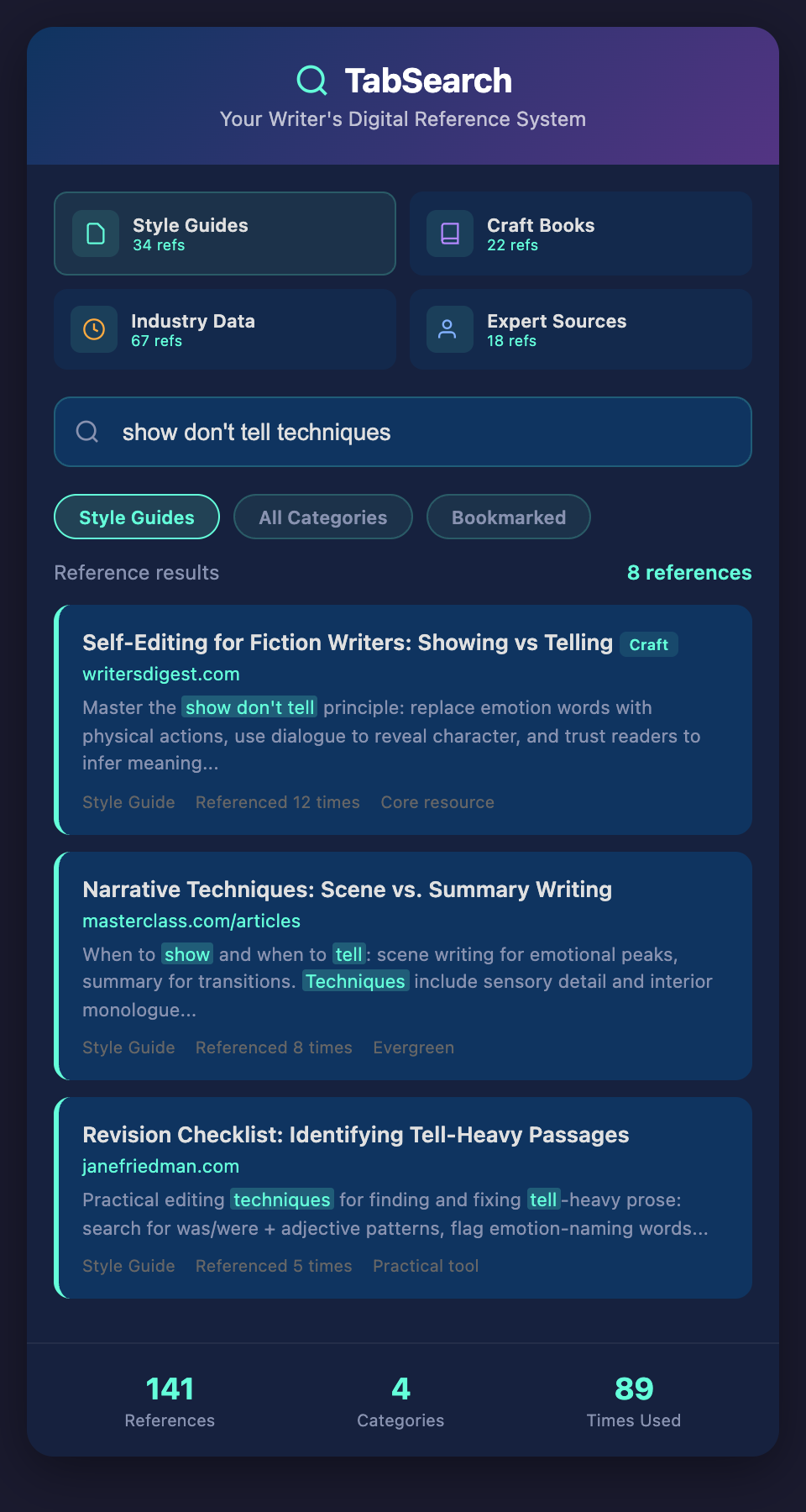
What Goes in Your Digital Reference System
A reference system isn't just articles and research. It's a curated collection organized around how you actually write:
Source Material
Articles, studies, reports, and other primary sources. Full text, not just links. Organized by topic, with metadata (author, publication, date).
Curated Quotes
Memorable, quotable passages from sources. Captured with context and attribution. Searchable and organized by topic.
Frameworks and Models
Thinking systems you use in your writing. The 5-paragraph essay structure. The hero's journey. The Problem-Agitate-Solve copywriting model. Clear, referenced, easy to find when you need them.
Templates
Writing structures you return to. Email templates. Article outlines. Case study formats. Quick access to structures that reduce writing friction.
Examples
Real-world examples of the concepts you write about. Case studies, product examples, company examples. Organized by category so you can find a relevant example quickly.
Definitions
Key terms specific to your niche. Precise definitions, with attribution. Great for ensuring consistent terminology and quick reference.
Visual References
Screenshots, images, diagrams that illustrate concepts. Visual references are especially valuable for writers who need to remember how something looks or works.
The Architecture of an Effective Reference System
Organized Around Your Writing Needs
Don't organize by source. Organize around how you write. A reference system for a business writer might be organized:
-
Core concepts (value prop, customer segmentation, unit economics, pricing psychology)
-
Case studies (by industry or concept)
-
Quotes (by theme or topic)
-
Templates (pitch deck, proposal, email)
-
Metrics and benchmarks (industry standards you reference frequently)
-
Examples (good writing, bad writing, controversial approaches)
When you're writing about pricing strategy, you go to "pricing psychology," and you have quotes, case studies, frameworks, and examples all in one place. You don't have to hunt across different sources.
Layered with Context
Each item in your reference system should include context:
-
Where did this come from? (source, author, publication, date)
-
Why did I save it? (what problem does it solve? what inspired me?)
-
How do I use it? (example: "use this framework when writing about [specific situation]")
-
What's related? (connections to other items in the system)
This context is what transforms a collection into a system. It's the difference between having information and being able to use it.
Optimized for Retrieval
Your reference system should be searchable in multiple ways:
-
Full-text search across all content
-
Browse by category or topic
-
Recent additions (what did I save recently?)
-
Most-used items (what do I reference most?)
-
Related items (what connects to this?)
With these retrieval options, you can find what you need in seconds, regardless of how you remember it.
Building Your Reference System
Phase 1: Collect
For two weeks, as you read and research, capture things that stand out:
-
Great examples of writing
-
Quotes you want to remember
-
Case studies or examples
-
Interesting data or frameworks
-
Anything else that makes you think "I'll probably reference this again"
Don't organize yet. Just collect. The goal is to have enough material to start seeing patterns.
Phase 2: Organize
Look at what you've collected. Group similar items. What patterns emerge?
You've probably captured:
-
Multiple examples on certain topics
-
Quotes that cluster around themes
-
Frameworks you keep referencing
-
Case studies from similar industries
Use these patterns to create your top-level categories. For a business writer, maybe:
-
Pricing & monetization
-
Marketing & positioning
-
Operations & scaling
-
Psychology & behavior
Don't overthink this. Your categories should evolve as you use the system.
Phase 3: Make It Usable
Move items from wherever you've captured them (notes, bookmarks, emails, documents) into your unified reference system.
As you move items, add context:
-
Why did I save this?
-
When would I use it?
-
What connections exist to other items?
This is work, but it's one-time work. And it's work that makes everything that comes after faster.
Phase 4: Use Regularly
Start referencing your system when you write. Instead of searching Google for a quote or example, search your personal reference system first.
You'll notice:
-
You write faster (you have examples and quotes ready)
-
Your writing is more specific (you have real examples, not generic ones)
-
You're more confident (everything is verified and attributed)
-
You spot patterns (because you're seeing your knowledge organized)
The Compound Effect
A reference system is like a physical library: it gets better the more you use it.
After one month, you have 30-50 items. It's useful but small.
After three months, you have 150-200 items. You start noticing patterns. You have enough examples that you always find something relevant.
After six months, you have 400+ items. You're an expert on your core topics partly because you've systematically built your reference system. You write faster and better because you have everything at your fingertips.
After a year, your reference system is invaluable. It's your external brain. It makes you faster and better at what you do.
Why This Matters
The writers and creators who stand out aren't necessarily the smartest. They're the most organized. They've built systems that let them:
-
Access their knowledge instantly
-
See patterns and connections
-
Provide specific examples instead of generic claims
-
Write with confidence because everything is verified
-
Work faster because research is done
A personal digital reference system is that system.
Start Building Today
You don't need a fancy tool. You need:
-
One place for all references (unified storage)
-
Flexible organization (tags and categories that make sense to you)
-
Searchability (find anything by content, not just by folder)
-
Accessibility (access from your writing tool)
Pick one and start collecting.
Ready to build your digital reference library? Join our waitlist to get early access to a tool purpose-built for writers—one that makes capturing, organizing, and referencing sources effortless.