Managing Research Papers and Citation Workflows Effectively
The Citation Crisis
You're writing a grant proposal. It requires citing 50+ sources with consistent formatting. You find papers in three places:
-
PDFs downloaded and lost in your file system
-
Browser bookmarks you can't find
-
Papers recommended by colleagues (email attachments)
-
Journal databases you need to log back into
-
References within other papers (need to find and verify)
Each citation requires:
-
Locating the paper
-
Finding all publication details
-
Checking the citation format required by the grant agency
-
Reformatting if you use the wrong format initially
-
Ensuring consistency across all 50+ citations
One grant proposal involves 3-5 hours of citation management work—valuable time that contributes nothing to research quality.
Multiply across multiple papers, proposals, and grant cycles throughout your career: you spend weeks per year just managing citation logistics.
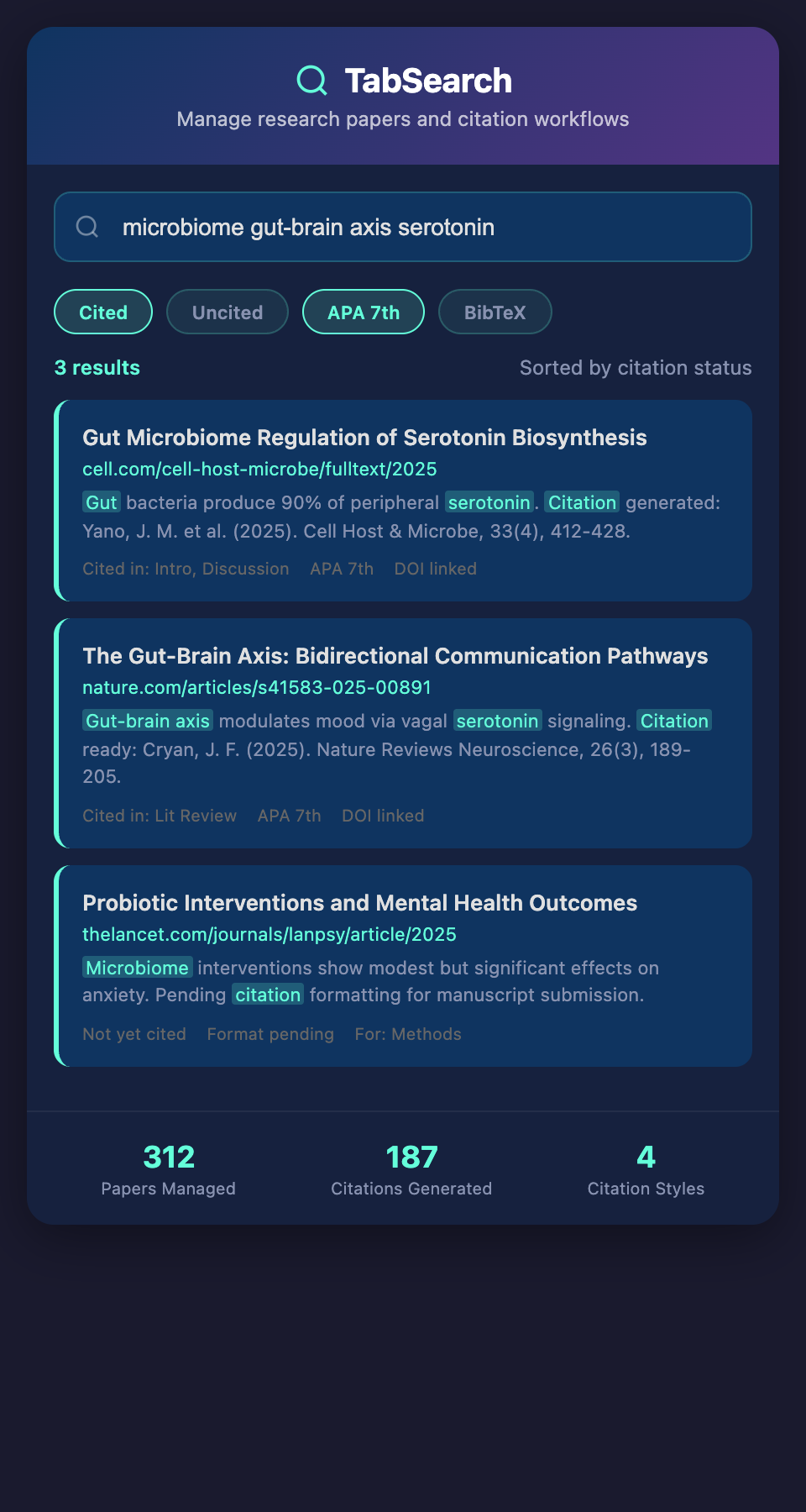
The Citation Management Problem
Traditional reference managers try to solve this:
-
Zotero: Comprehensive but requires manual import and organization
-
Mendeley: Desktop application with learning curve
-
EndNote: Expensive and outdated interface
-
BibTeX: Powerful but requires technical sophistication
-
Manual spreadsheets: Flexible but require constant maintenance
All require significant setup. All require manual importing as you discover sources. All have learning curves.
The result: many researchers skip reference managers entirely and manage citations manually—which is slow and error-prone.
Intelligent Paper and Citation Management
An intelligent citation system requires:
Automatic Source Capture
Every paper you open is captured with:
-
Author information
-
Publication date
-
Journal or conference
-
DOI or URL
-
Full text for reference
No manual import required. You read the paper; it's automatically documented.
Citation Format Generation
Export citations in any format:
-
APA, Chicago, MLA, Harvard
-
Vancouver, IEEE
-
BibTeX, RIS (for other systems)
Change formats by selecting a different option. No reformatting.
Cross-Application Support
Citations work everywhere:
-
Export to Google Docs, Word, or other writing applications
-
Generate bibliography lists automatically
-
Create BibTeX files for LaTeX documents
-
Copy formatted citations to clipboard
Integrity Checking
The system verifies:
-
All authors are included
-
Publication details are correct
-
Formatting is consistent
-
DOIs and URLs are active
Structuring Your Citation Workflow
Integrated Reading and Citation
As you read sources:
-
Source is captured with all metadata
-
Relevant passages are highlighted
-
Brief notes document significance
When you write:
-
Search for sources on relevant topics
-
Click to insert citations
-
Bibliography is generated automatically
That's the entire workflow. No separate citation management tool.
Batch Citation Formatting
Writing multiple papers simultaneously? Export your bibliography once from your entire research collection. All sources are formatted consistently.
Citation Verification
Before submitting, check your bibliography:
-
All sources are properly formatted
-
All in-text citations have bibliography entries
-
No inconsistencies in author names or dates
-
All DOIs and URLs are current
Real-World Example: Grant Proposal Citation Workflow
A researcher writing a NSF proposal requiring 40+ citations:
Traditional approach (3-4 hours):
-
Locate 40 papers across different sources: 1 hour
-
Copy citation details into reference manager: 1.5 hours
-
Check formatting for grant agency requirements: 30 minutes
-
Create bibliography and verify consistency: 30 minutes
-
Reformat twice because initial format was wrong: 30 minutes
Intelligent system approach (30 minutes):
-
All papers already captured as they were read: 0 hours (automatic)
-
Search for relevant papers on topic: 10 minutes
-
Review search results, select 40 most relevant: 10 minutes
-
Export bibliography in grant agency's required format: 5 minutes
-
Verify consistency: 5 minutes
Time saved: 3+ hours per proposal.
With 2-3 grant proposals per year per researcher, that's 6-9 hours reclaimed annually per researcher. At university with 20 active researchers, that's 120-180 hours annually—equivalent to 3-5 full work weeks.
Implementation Strategy
Week 1: Automatic Capture
Enable automatic citation capture as you read sources. Build a captured research collection without manual work.
Week 2: Search and Export
Practice finding sources by searching your captured collection. Export citations in your preferred format.
Week 3: Format Switching
Learn how to quickly change citation formats for different projects and requirements.
Week 4: Integration with Writing
When writing, use the system to insert and manage citations. Watch citation management overhead disappear.
Handling Complex Citation Scenarios
Multiple Authors
The system captures all authors. Export shows all authors or uses et al. format based on citation style.
Recent Preprints
Preprints are captured and cited as preprints. When the published version appears, the system updates the citation details.
Retracted or Corrected Papers
The system monitors for retractions and significant corrections. Alerts you if a source you've cited has issues.
Gray Literature
Not every source is a journal article. Manage book chapters, working papers, blog posts, and datasets with the same system.
Expected Outcomes
Researchers managing citations intelligently report:
-
3-4 hours per paper saved: No manual citation management
-
100% citation accuracy: Automatic formatting and verification
-
Instant format switching: Change citation styles in seconds
-
Better organization: All papers and citations in one system
The Long-Term Advantage
Citation management isn't exciting work. It's necessary overhead. The best citation system is one that operates invisibly—capturing automatically, formatting correctly, and staying out of your way.
When you focus research time on research thinking rather than citation logistics, your output improves.
Reclaim hours per year from citation management. Join the waitlist for automatic paper capture and intelligent citation workflows.