Building and Maintaining Narrative Tension in Your Actual Play Campaign
Tension Is Audience Retention
In a home game, tension makes sessions exciting. In a published show, tension makes the difference between a listener who finishes the series and one who drops off at Episode 15. Tension is the emotional engine that drives binge-listening, social sharing, and audience loyalty.
Understanding how tension works — how to build it, sustain it, and release it — is one of the most important skills for actual play show creators.
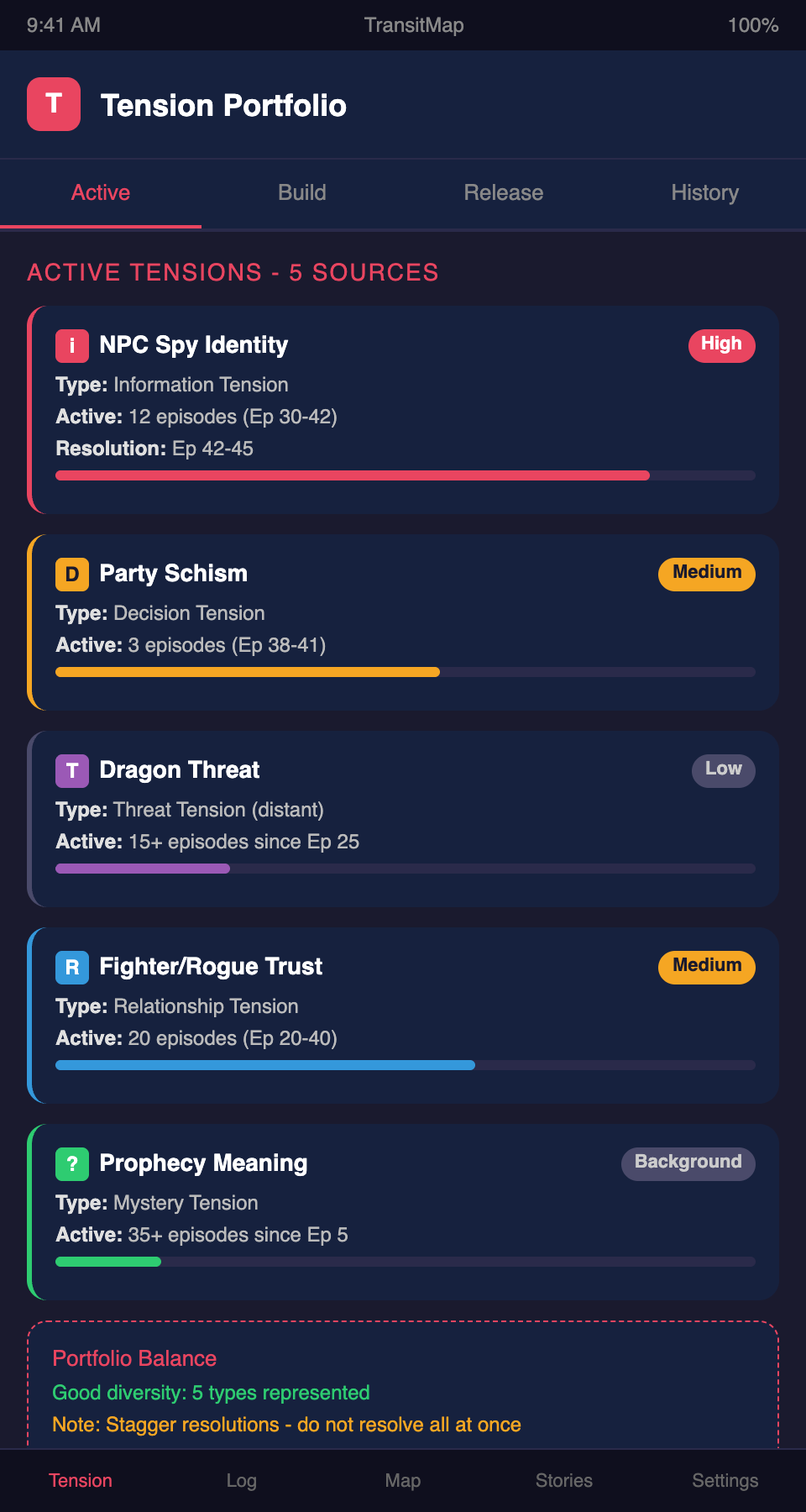
The Five Sources of Narrative Tension
1. Information Tension
The audience knows (or suspects) something the characters do not. Or the characters know something the audience does not. Either creates tension through the gap between knowledge and ignorance.
Building it: Reveal a piece of information to one character but not the others. Have an NPC lie while the audience can tell they are lying. Show the villain's plans in a cutaway scene.
Sustaining it: Let the information gap persist across multiple episodes. The longer the audience waits for the characters to discover what they already know (or vice versa), the more tension builds.
Releasing it: The information is finally revealed, shared, or acted upon. The release should be dramatic — a confrontation, a betrayal, a realization.
2. Decision Tension
A difficult choice is approaching. The audience can see the decision point and is uncertain which way the characters will go.
Building it: Make the decision's stakes clear. Show the consequences of each option. Create a deadline that forces the decision.
Sustaining it: Let the characters debate. Let them seek counsel. Let them waver. The audience's investment grows with each moment of indecision.
Releasing it: The decision is made. The consequences begin.
3. Threat Tension
A danger exists that has not yet manifested. The audience knows it is coming but does not know when or how.
Building it: Introduce the threat. Show its power. Establish what it will do when it arrives.
Sustaining it: Keep the threat visible but distant. Let the characters prepare. Let the audience worry about whether the preparations will be enough.
Releasing it: The threat arrives. The confrontation occurs.
4. Relationship Tension
Two characters have a relationship that is under strain. The audience is uncertain whether the relationship will survive.
Building it: Create conflicting loyalties, secrets, or goals between characters. Let disagreements simmer without resolution.
Sustaining it: Add complications. Each episode adds another reason the relationship might break — and another reason it might hold.
Releasing it: The relationship is tested definitively. It either breaks, transforms, or is reaffirmed.
5. Mystery Tension
A question has been posed that has not been answered. The audience wants to know.
Building it: Pose the question clearly. Provide enough information for the audience to theorize but not enough to answer definitively.
Sustaining it: Add clues that partially answer the question while raising new questions. Each revelation deepens the mystery rather than resolving it.
Releasing it: The answer is revealed. The mystery resolves.
Managing Tension Across Episodes
The tension portfolio. At any given time, your show should have three to five active sources of tension from different categories. This ensures that even when one tension is released, others sustain audience engagement.
Staggered resolution. Do not resolve all tensions simultaneously. Resolve one tension every two to four episodes while introducing new tensions at a similar rate. This creates a rolling wave of engagement.
The tension ladder. Each new tension should be slightly higher stakes than the last. Over the course of a season, the cumulative tension climbs. Individual tensions resolve, but the overall tension level increases.
Tension Tracking
Add a tension tracker to your production tools:
| Tension | Type | Introduced | Current Intensity | Expected Resolution | Episodes Active |
|---|---|---|---|---|---|
| NPC spy identity | Information | Ep 30 | High | Ep 42-45 | 12 |
| Party schism over plan | Decision | Ep 38 | Medium | Ep 40-41 | 3 |
| Dragon threat | Threat | Ep 25 | Low (distant) | Season finale | 15+ |
| Fighter/Rogue trust | Relationship | Ep 20 | Medium | Ep 45-50 | 20 |
| Prophecy meaning | Mystery | Ep 5 | Low (background) | Season 2 | 35+ |
This tracker shows your tension portfolio at a glance. If all tensions are the same type, add variety. If all tensions are high intensity, some listeners will be exhausted. If all are low intensity, some listeners will be bored.
Common Tension Mistakes
- Tension without release — Maintaining tension indefinitely without ever paying it off. Audiences become frustrated and stop trusting the show to deliver.
- Premature release — Resolving tension before it has built sufficiently. The payoff feels underwhelming because the audience was not invested enough yet.
- Tension whiplash — Rapidly alternating between high and zero tension. The audience never settles into a rhythm.
- Single-source tension — Relying on only one type of tension (usually threat). Diverse tension sources create richer listening experiences.
- Telegraphed resolution — The audience can predict exactly how the tension will resolve, eliminating the uncertainty that makes tension work.
Want to track and manage narrative tension across your show's run? Join the TransitMap waitlist — visualize your tension portfolio as pressure indicators on your storyline map, with build and release points marked for every active source of audience engagement.