Leveraging Audience Theory Crafting to Build Podcast Engagement
The Theory Crafting Flywheel
Theory crafting is self-reinforcing. A listener forms a theory. They share it with other listeners. Others agree, disagree, or propose alternatives. The discussion deepens everyone's investment in the show. They listen more carefully to the next episode, searching for evidence. They find something ambiguous, and the cycle begins again.
This flywheel is the most powerful organic growth mechanism for an actual play show. Listeners who theorize recruit new listeners because they need people to discuss theories with. Communities built around theory crafting are stickier than communities built around passive consumption.
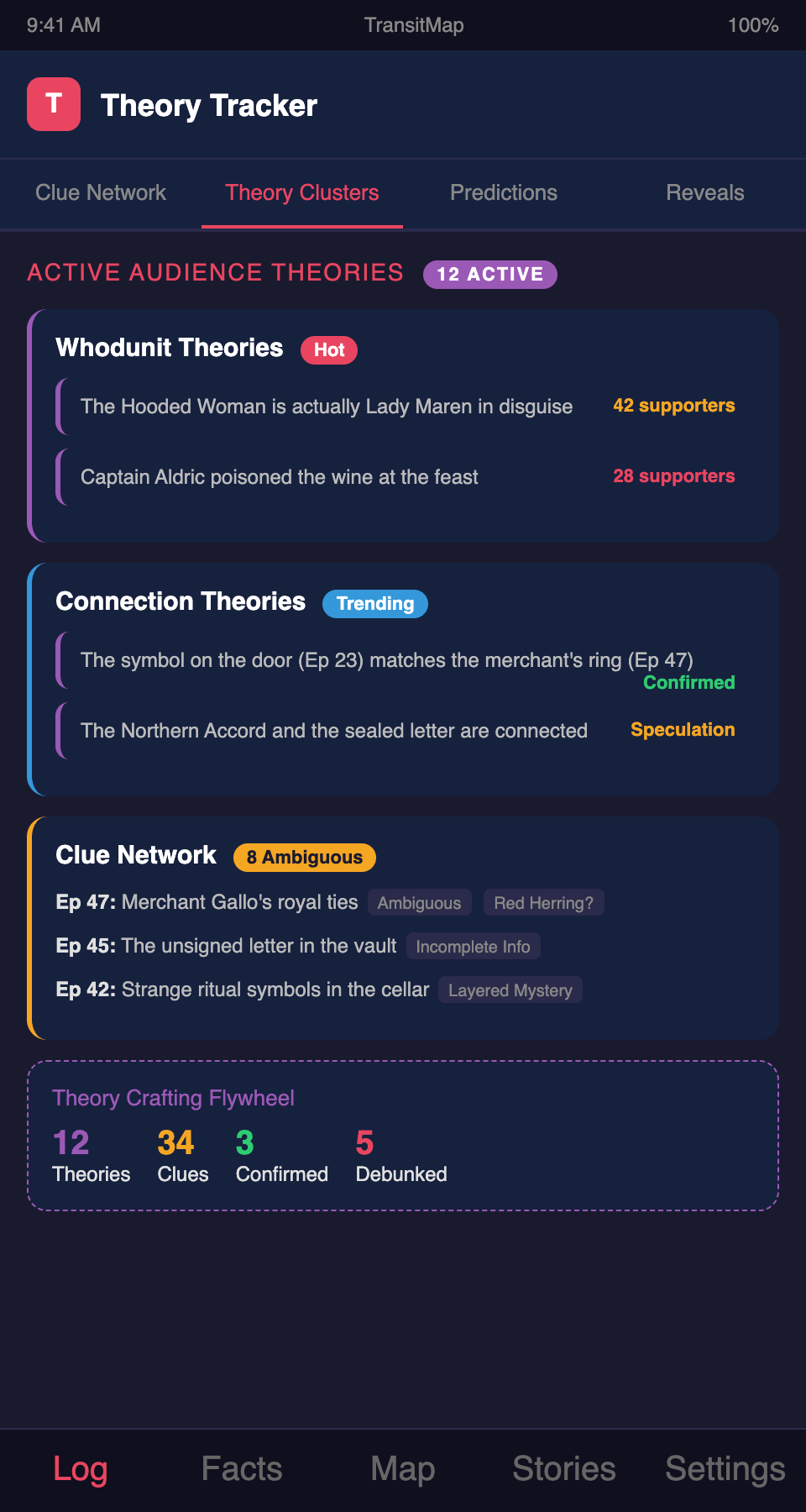
Designing for Theory Crafting
Theory crafting does not happen by accident. You need to design your show to invite speculation:
Plant ambiguous clues. A clue that clearly points to one conclusion does not generate theories. A clue that could point to two or three conclusions generates discussion. When you introduce important plot information, consider how to present it with deliberate ambiguity.
Provide incomplete information. Give the audience enough to form a theory but not enough to confirm it. "The letter was signed with a symbol you do not recognize" invites speculation about who sent it. "The letter was signed by Lord Varen" does not.
Create prediction opportunities. Before a major decision or revelation, give the audience time to predict the outcome. End an episode with the decision pending. Let the audience spend a week theorizing before the next episode answers the question.
Include red herrings. False leads that are plausible enough to generate theories but ultimately prove incorrect. The key is that the red herring must be fair — it should be genuinely misleading, not absurd. When it is revealed as a red herring, the audience should think "I should have seen that" rather than "that was never a real possibility."
Layer mysteries. When one mystery is solved, another should already be in progress. The audience should always have something to theorize about.
Types of Theories to Encourage
Different types of theories generate different kinds of engagement:
Whodunit theories. Who is the traitor? Who sent the message? Who is behind the conspiracy? These are the most straightforward theories and generate the most accessible discussion.
Motivation theories. Why did the NPC act that way? What does the villain actually want? Why did the ally withhold information? Motivation theories generate deeper character discussion.
Connection theories. How are these two events related? Is the character from Episode 5 connected to the faction from Episode 15? Connection theories reward attentive listeners who track details across episodes.
Prediction theories. What will happen next? How will the arc resolve? What choice will the characters make? Prediction theories build anticipation for upcoming episodes.
Meta theories. What is the GM planning? Is this a deliberate setup for a future reveal? What game system mechanics might influence the outcome? Meta theories engage listeners who understand the production side of actual play.
Engaging With Audience Theories
How you respond to theories shapes the community's theorizing behavior:
Acknowledge theories without confirming or denying. "I love that theory" is the perfect response. It validates the theorist without spoiling the show. Avoid any response that narrows the possibility space — even "that is interesting but not quite right" tells the audience more than you should reveal.
Highlight theory discussions. Share community theories on your social media or mention them at the start of episodes: "I have seen some incredible theories in the Discord this week." This encourages more theorizing by showing that you value it.
Reward correct theories in the show. When the audience correctly predicts a development, let it play out. Do not change your plans just because the audience figured it out. Being proven right is immensely satisfying for theorists and encourages continued engagement.
Create theory-friendly spaces. Dedicated channels in your Discord for theory discussion. Weekly theory threads on Reddit. Theory-focused segments in bonus content. Give theorists a home.
The Theory Crafting Calendar
Time your content to maximize theory crafting opportunities:
Post-episode discussion windows. Release episodes on a consistent schedule and encourage theory discussion in the twenty-four to forty-eight hours after each episode drops. This is when engagement is highest.
Mid-week theory prompts. Between episodes, post a question or image that sparks theory discussion: "What do you think the symbol on the door means?" This maintains engagement between releases.
Pre-finale speculation events. Before arc or season finales, host dedicated theory-crafting events — prediction contests, theory roundups, or live speculation streams. These build anticipation for the finale.
Post-reveal analysis. After a major revelation, highlight which theories were correct, which were close, and which were completely off base. This retrospective discussion generates almost as much engagement as the original theorizing.
Theory Crafting Pitfalls
Do not mock wrong theories. Incorrect theories represent engaged listeners. Mocking them discourages future theorizing.
Do not let theories change your plans reflexively. If the audience correctly guesses a twist, the temptation is to change it. Resist. A twist that is set up well enough for the audience to predict is a well-constructed twist. Changing it often produces a worse outcome.
Do not plant theories yourself. Creating fake audience accounts to seed theories is dishonest and will be discovered. Let theories emerge organically.
Do not spoil through theory engagement. Your reaction to specific theories can inadvertently confirm or deny them. Maintain consistent engagement across all theories, not just the ones that are wrong.
Do not let theory pressure dictate pacing. If the audience is deeply invested in a theory, you might feel pressure to resolve the mystery quickly. Maintain your planned pacing. The anticipation is part of the experience.
Want to track which theories your audience is forming and how your story's clues relate to them? Join the TransitMap waitlist — map clue networks, track audience theory clusters, and plan revelations that maximize the theory crafting experience.