Planning Your Kickstarter RPG Module Development
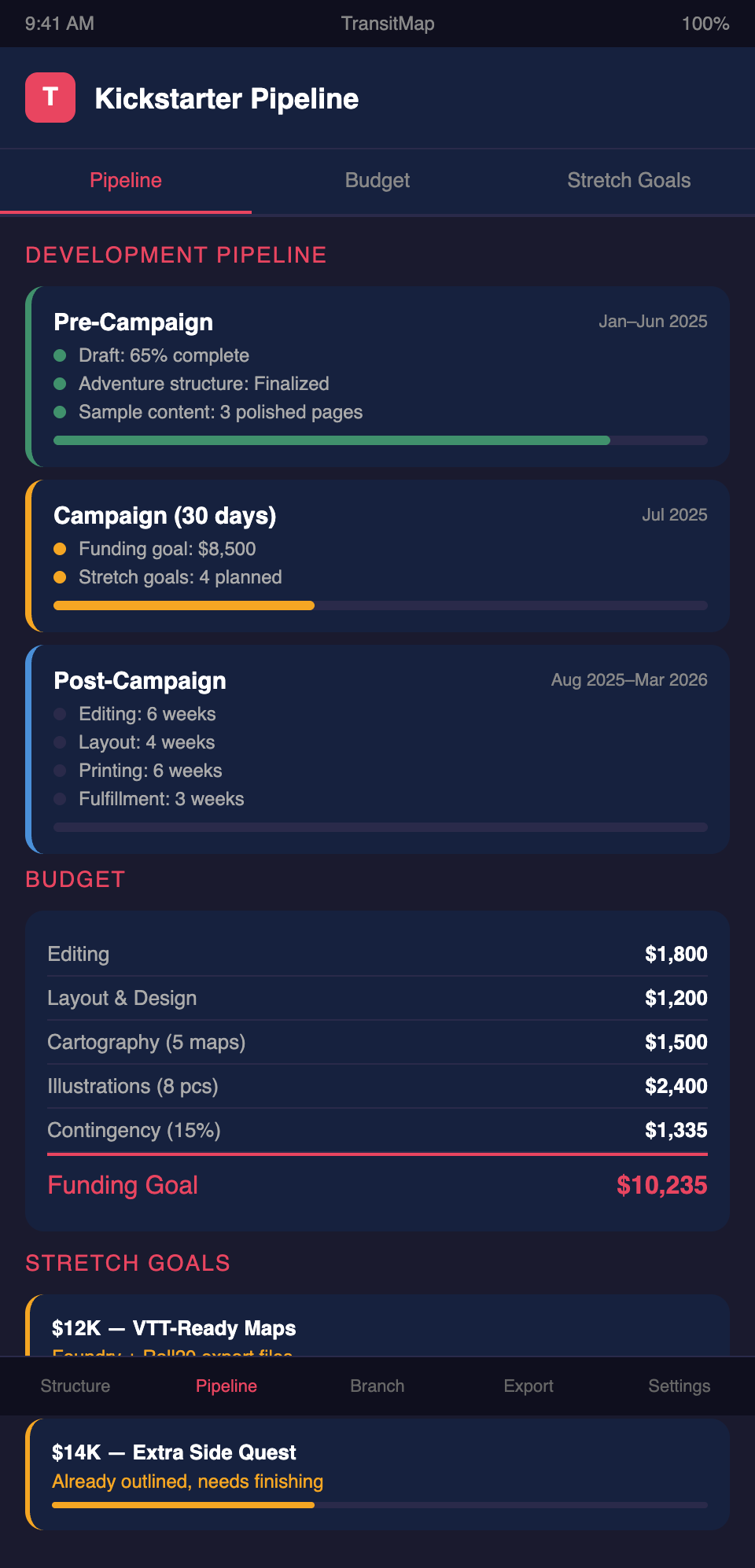
The Kickstarter Module Pipeline
The pipeline for a Kickstarter-funded RPG module has three phases:
Pre-campaign (3-6 months). Develop the module to a substantial draft stage. Create the campaign page. Build an audience. Prepare fulfillment logistics.
Campaign (30 days). Run the crowdfunding campaign. Manage backers. Announce stretch goals. Build excitement.
Post-campaign (3-12 months). Complete development. Edit, layout, print, and fulfill. Deliver the product to backers.
Most failed RPG Kickstarters fail in the post-campaign phase because the creator underestimated the work required after funding. Planning your post-campaign work before launching is essential.
Pre-Campaign Development
Write a substantial draft. Do not Kickstart a concept — Kickstart a product in progress. A module that is 50-70% written at campaign launch is dramatically more likely to fulfill on time than a module that exists only as an outline.
Complete the adventure structure. Even if the prose is not finished, the adventure's structure should be finalized — all paths, encounters, NPCs, and branching points designed and documented. Structural changes after the campaign are expensive and time-consuming.
Create sample content. Produce polished sample pages that demonstrate the module's quality: a complete encounter, a finished map, styled NPC cards, formatted sidebars. These samples sell the campaign and prove that you can deliver.
Estimate page count and production costs. Determine your module's final page count range, printing costs per unit, shipping costs, and fulfillment logistics. These numbers determine your funding goal and reward pricing.
Budgeting
Fixed costs:
- Editing (structural, content, line, copy): estimate by word count
- Layout and graphic design: estimate by page count
- Cartography: estimate by number of maps
- Illustration: estimate by number of pieces
- Proof copies: usually two to three rounds
Per-unit costs:
- Printing: based on page count, binding, and print run size
- Shipping: based on weight, destination, and carrier
- Fulfillment (if using a fulfillment service): per-unit handling fee
- Platform fees: Kickstarter takes approximately 8-10% (platform fee + payment processing)
Calculate your funding goal: Fixed costs + (Per-unit costs × Expected units) + 15-20% contingency = Funding goal
The contingency is not optional. Unexpected costs arise in every project — paper price increases, additional editing rounds, shipping rate changes.
Stretch Goals
Stretch goals are promises of additional content if funding exceeds the initial goal. Design them carefully:
Good stretch goals:
- Additional maps (already sketched, need finishing)
- Extra encounters or side quests (already outlined)
- Digital assets (VTT files, tokens, handouts)
- Improved production quality (hardcover upgrade, color printing)
- Companion content (GM screen, reference cards)
Dangerous stretch goals:
- Significantly more pages (delays production)
- Additional modules in the series (scope creep)
- Physical add-ons with separate manufacturing (complicates fulfillment)
- Features that require skills you do not have (custom software, miniatures)
The stretch goal rule: Only promise stretch goals for content that is already partially complete or that requires minimal additional work. A stretch goal that adds three months to your timeline is not a reward — it is a penalty for your backers.
Timeline Planning
Be honest about your timeline. The most common Kickstarter complaint is late delivery. Set a realistic delivery date and add buffer:
- Remaining writing: estimate weeks, add 50%
- Editing: 4-8 weeks depending on module length
- Layout: 4-6 weeks
- Proofing: 2-3 weeks
- Printing: 4-8 weeks (longer for overseas printing)
- Shipping to fulfillment: 2-4 weeks
- Fulfillment and delivery: 2-4 weeks
Total post-campaign timeline: typically 6-12 months for a professional-quality module.
Backer Communication
Update regularly. Monthly updates during development. More frequent updates during production and fulfillment. Backers who receive regular communication are patient. Backers who hear nothing assume the worst.
Be transparent about problems. If the timeline slips, explain why and provide a revised estimate. Backers understand delays. They do not understand silence.
Share progress. Show work in progress — draft pages, map sketches, layout samples. This reassures backers that the project is moving forward and builds excitement for the final product.
Post-Fulfillment
Retail planning. After backer fulfillment, make the module available for retail purchase through DriveThruRPG, your own website, or distribution. The Kickstarter campaign is the launch, not the entire market.
Review copies. Send review copies to RPG media outlets, podcasts, and content creators. Reviews drive post-campaign sales and build reputation for future projects.
Community support. Maintain a presence in the module's community. Answer questions, address errata, and engage with people playing your adventure. This builds loyalty for your next project.
Planning a Kickstarter for your RPG module? Join the TransitMap waitlist — map your entire development pipeline as a visual transit network, track milestones, manage stretch goal content, and keep your project on schedule from concept to fulfillment.